
You’re planning a trip to Buenos Aires and you want to do a food tour.
But then you start looking at your options and you get overwhelmed.
There’s the Sherpa Food Tour, Fogon Asado, the Asado Experience. And Betty and Marcelo’s Family Asado Tour
And then you see the prices. All of them well over US$100.
Ouch.
I spent so much time hemming and hawing over which one to do that by the time I tried to book one for a specific date, it was sold out.
In the end, I spent enough time in Buenos Aires (3 months) that I did 3 food tours and 1 cooking class:
- Sherpa Food Tour (the premium tour)
- Fogon Asado (the basic tour)
- Marcelo and Betty Asado Experience
- Argentina Experience Cooking Class (the premium tour)
I enjoyed the first three. I’d give the first 3 a grade of an A or higher and the last one a C.
But if I had to do just one all over again?
Betty and Marcelo’s. Without hesitation.
Here’s why it earns that top spot and why I think you should book it.
Disclosure: This post may contain affiliate links. As an Amazon Associate and a Bookshop.org Associate, I earn from qualifying purchases. Please see this website’s Disclosure for more info.
First: What Is an Asado?
Before we get into Betty and Marcelo’s specifically, you need to understand what you’re actually signing up for.
Google Translate tells you “asado” means barbecue. That’s not wrong. It’s just not the full picture.
In Argentina, asado has three meanings.
An event. The asado is a social gathering–extended family in the backyard on a Sunday afternoon with meat on the grill from noon until well into the night. There’s plenty of Malbec. And yes, family drama. Betty told me that showing up is basically mandatory. To be invited to one is the closest you can get to real Argentinian life.
A cooking technique. Meat cooked slowly over wood or charcoal on a parrilla (a fancy Argentinian grill) for at least one to three hours. No marinade. Just salt. The flavor comes less from the sauces and seasoning like in barbecue in the United State and instead entirely from the quality of the grass-fed beef and the control of the fire.
A cut of beef. When a restaurant menu says asado, it means ribs. Specifically, tira de asado, thin-cut short ribs sliced across the bone. More bone and fat than other cuts, but very flavorful.
Who Are Betty and Marcelo?
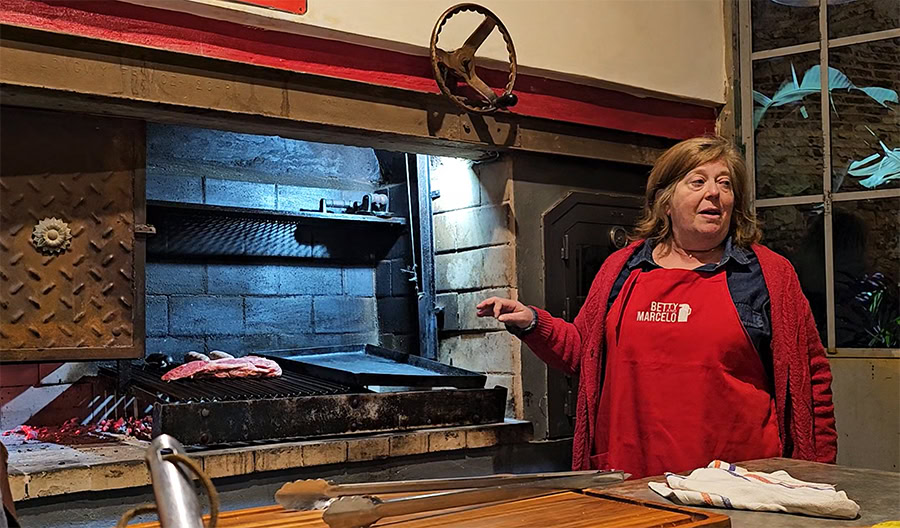
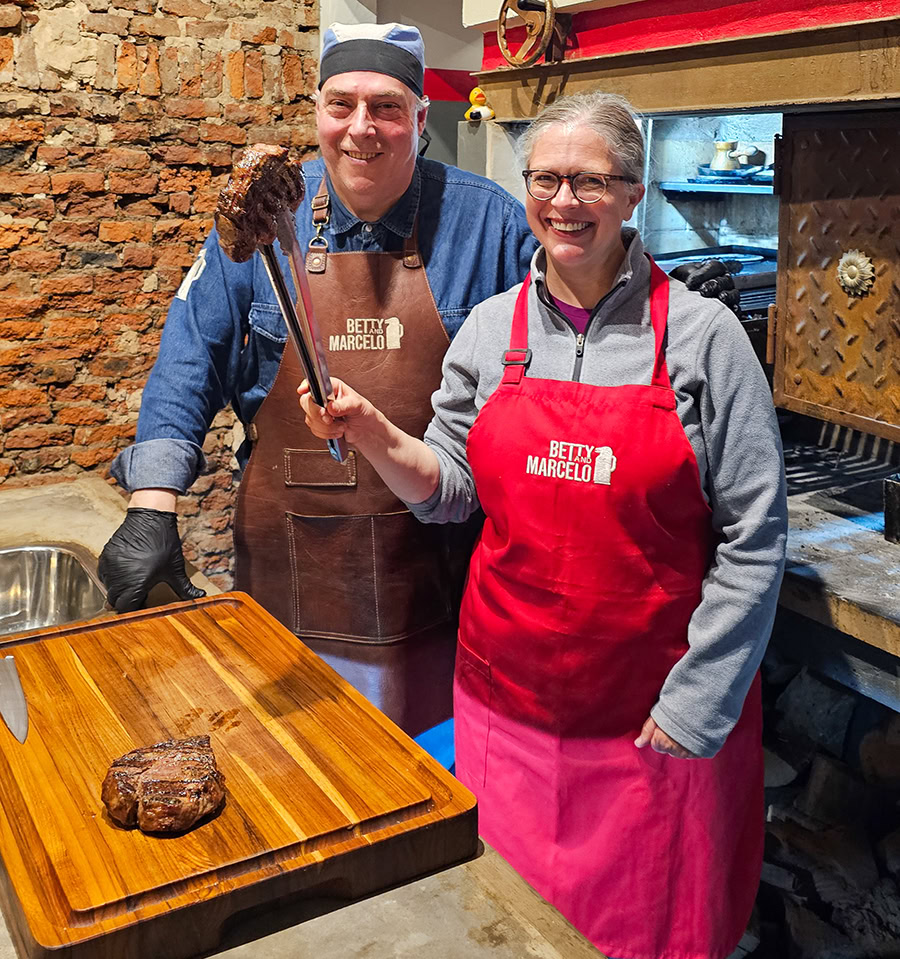
Betty and Marcelo are a husband and wife team who started their asado experience in 2024. The premise is simple: invite foreign visitors into their home for a real, home-style Argentine asado, giving you a window into one of the most important family events in the country, minus the family drama.
Betty and Veronica both speak fluent English. Marcelo is the grill master. He spends most of his time where he should be: tending the fire. He doesn’t speak English, but he doesn’t need to. The parrilla does the talking.
Why did I book Betty and Marcelo’s Family Asado Dinner?
To be honest, I rarely eat steak. Back in my home country, I don’t even really like it all that much. Before Argentina, it would have been the last thing I would order on a menu.
But here in Argentina, I had to go all in on an asado.
For 2 reasons:
One: The best way to understand a culture is through its food, and asado is the most important dining event in Argentina.
Two: Asado is basically a family experience, and since I don’t know any Argentine families well enough to be invited to one, this was the closest I was going to get.
How to Book
I booked through Viator. This site and Get Your Guide are where I usually book my tours. Their 24-hour cancellation policy is essential. If things go wrong (guide doesn’t show up or you can’t find the meeting point), you can easily and quickly contact both Viator and Get Your Guide. And the reviews are from people who actually took the tour.
Worth knowing: Viator has a price-match policy. If you find the tour cheaper elsewhere, they’ll match it or refund the difference.
I recommend booking in advance. It does sell out.
When I booked, the price was US$84. It’s now US$110. With inflation in Argentina so high (it was 30% in 2025), the price will likely keep climbing. But I’ll say it plainly: at $110, it’s still worth it.
The Experience
To give you an idea of what you’re in for (if you book), I’ll tell you what I experienced. Just keep in mind that tours change and what you do in 2026 or 2027 might not be the exact same as mine. But it’ll probably be close.
Arrival
My tour started at 7:00 PM in Palermo Soho, one of the safest and most walkable neighborhoods in Buenos Aires. I walked there alone from Palermo Hollywood, about 30 minutes on foot, and walked back the same way at 10:00 PM. The sidewalks and streeets were full of traffic even at that time of night. But then again, this is Argentina, and life seems to not really start until 10:00 PM anyway. So I had zero issues.
The location was a nondescript building. No big sign, no obvious storefront. Just a small “Betty and Marcelo’s” next to a doorbell. Ring it.
Their daughter, Veronica, answered, led me down a long narrow corridor, and brought me out into a small courtyard where Betty and the other guests were waiting.
Appetizers: Torrontés and Tucumán Empanadas
I was handed a glass of Torrontés, a white wine from the Domingo Hermanos winery in Cafayate. If you haven’t spent time in South America, you may not have heard of it. It’s grown across Argentina, Bolivia, Brazil, and Chile. More acidic and tannic than most European or American whites. It’s sweet. It pairs well with empanadas, which is exactly why it’s served first at an asado.
The empanadas were from Tucumán province in northwestern Argentina. Smaller and juicier than the Buenos Aires style you’ll find at most restaurants. Tucumán empanadas are considered the best in the country.
They were.
The Dining Room
Betty led us inside to a bright room with brick walls, artwork, a small shelf of souvenirs, an old upright piano, family photos, a wine rack, and knick-knacks. A large table sat in the center with chairs arranged in a U-shape, maybe twelve in total. At the front of the room stood the parrilla.
I want to be upfront about something. Betty and Marcelo advertise this as “having asado with a local family.” I was expecting someone’s home. This was not their home.
Betty explained why. They live 40 minutes from the city center, too far for foreign visitors. So they rented a space in Palermo Soho instead.
Fair enough. And honestly? It works. The family photos, the warm colors, the lived-in feel of the space made it feel as close to a home as a rented room in Palermo probably can. It didn’t feel like a restaurant. That mattered. But what mattered most was Betty, Marcelo, and Veronica themselves. They were so welcoming and open that they made you feel like you were actually having dinner with a family.
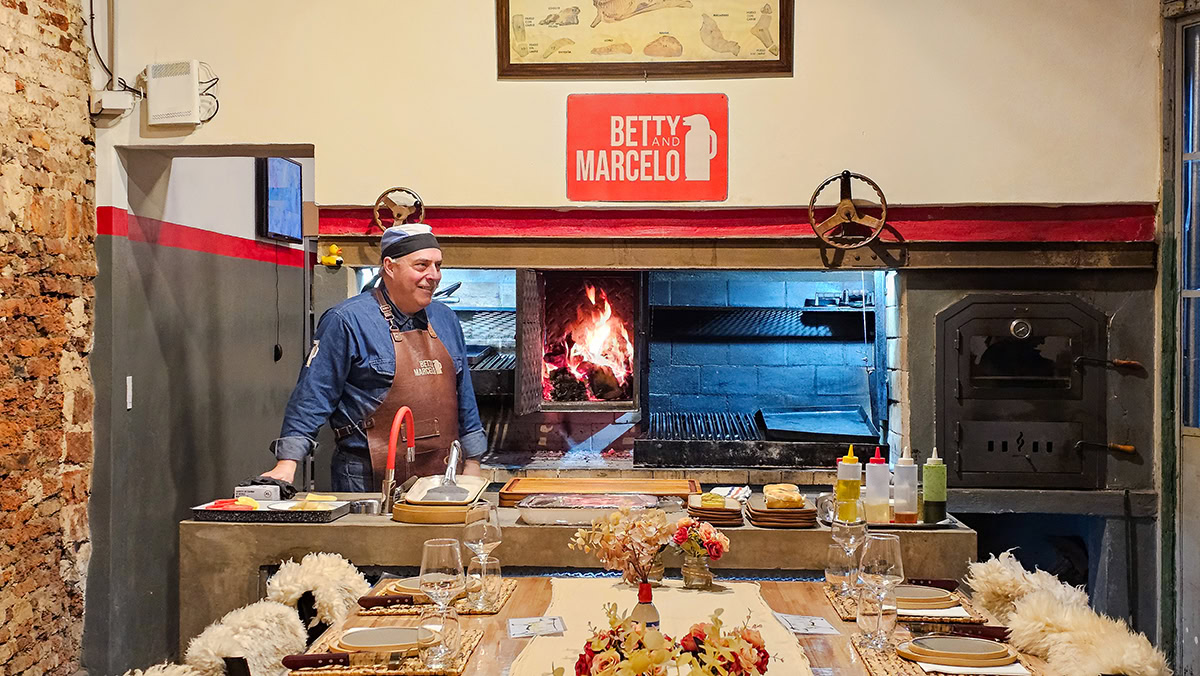
Behind the parrilla stood Marcelo in his brown apron and chef’s cap. Betty mentioned that he won a contest for the best master asado chef (asador) in Buenos Aires.
Given what followed, I believe it.
About the Parrilla
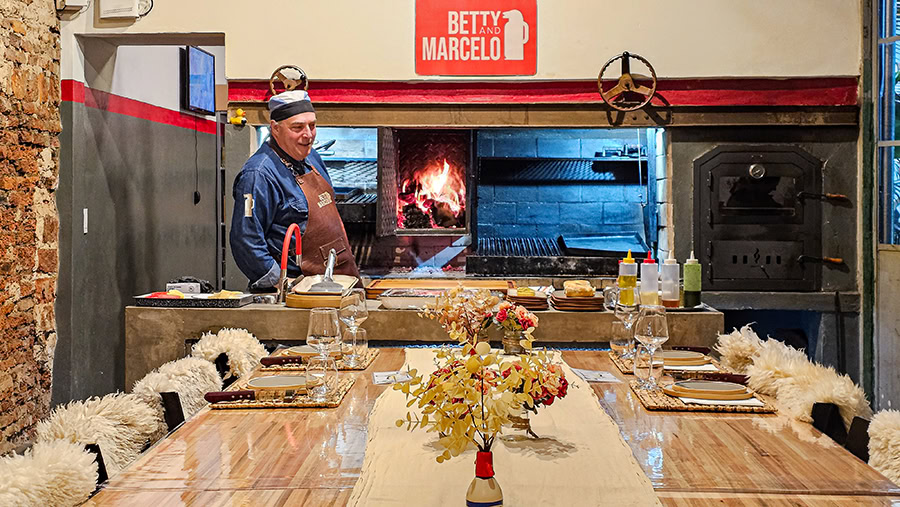
Before the food, a quick note on the grill (parrilla) itself, because Betty and Marcelo walk you through it. An Argentinian grill is different from what most of their guests are used to. Since this is where all the magic happens during the dinner, it’s important to know how it works.
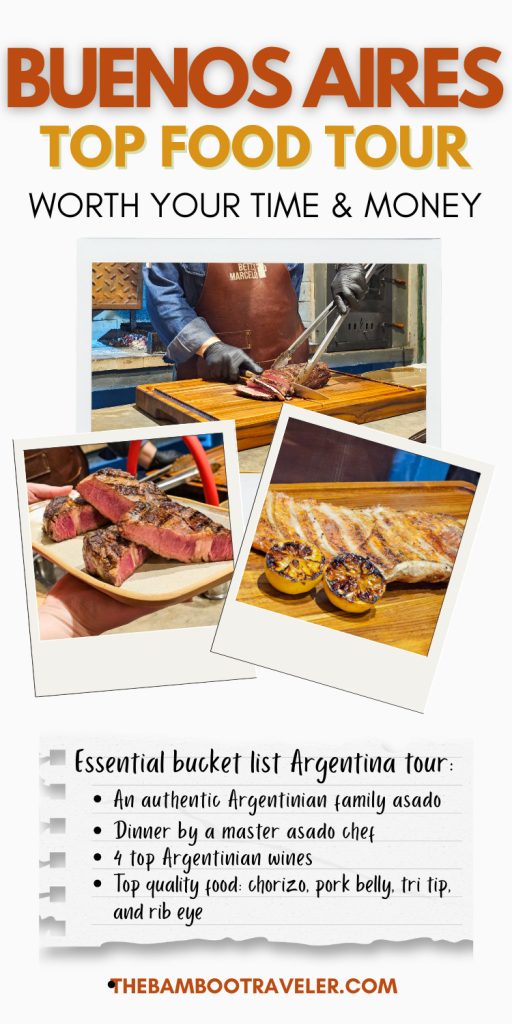
A parrilla has three parts. On the right is the grill or grate. It is slightly tilted so that fat and juices run off into a trough rather than dripping onto the coals below. On the left is the brasero, a metal firebox where the wood burns down into coals before being transferred under the grill. And the crank above the grill raises and lowers the cooking surface, which is how the temperature is controlled. Asado chefs don’t use a thermometer or timer. It’s all experience.
Book Your Tour: Viator or Get Your Guide
How Many People?
There were three of us that evening: me and a couple from Australia. Betty mentioned that some nights they have 30 guests and some nights just three. They even do events for corporations.
As a solo traveler, tours are a great way to meet people, so I was hoping for more.
But the small group turned out to be the right size. We spent the entire evening talking with Betty and Veronica. By the end of the night I knew more about Argentine culture, food, and family life than I had learned in weeks of wandering the city on my own.
The Food
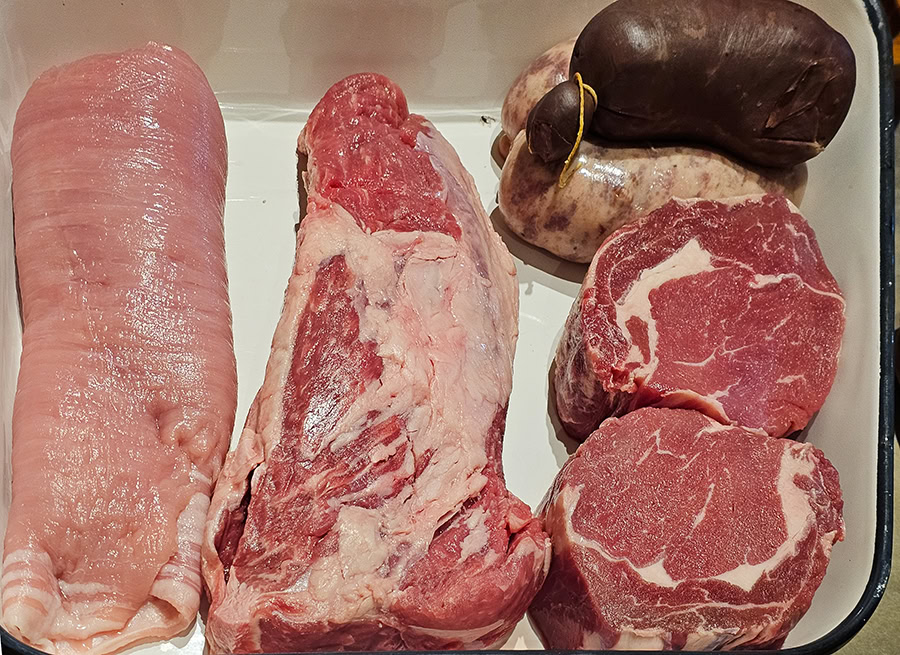
Marcelo introduced each cut of meat in its raw form before grilling it. Betty explained what he was doing and told us the stories behind each cut. There is a specific order to an asado: lighter meats first, heavier cuts last. Watching it unfold from a front row seat as our dishes went from raw ingredient to finished plate was genuinely fascinating.
Here’s what we ate.
Dish 1: Morcilla (Blood Sausage)
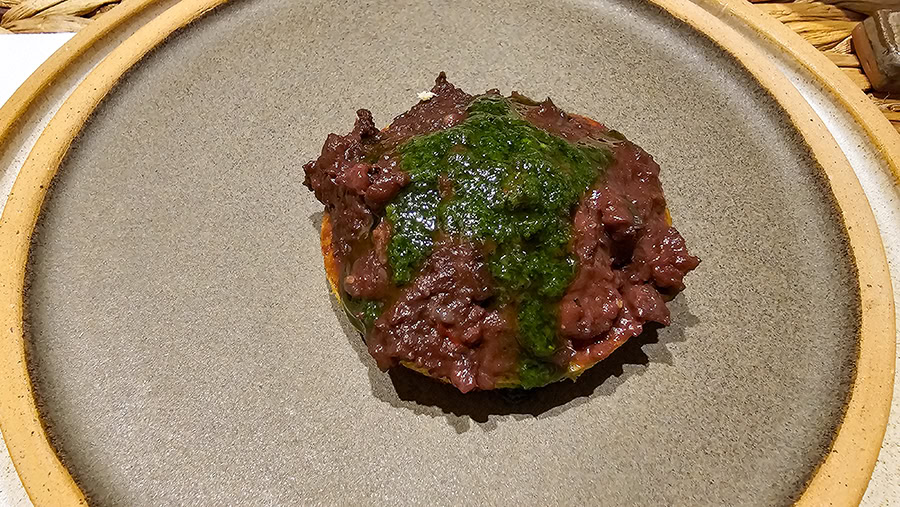
Just like in a traditional asado, our meal started with morcilla, better known to most of you as blood sausage. This is something I would never order myself in a restaurant. And that is why I love food tours: They take me out of my comfort zone.
Argentinian blood sausage is usually pig’s blood mixed with pork fat, onions, and spices. Originally the recipe comes from Spain, but Argentinians have adapted it to make it all their own.
According to Betty, morcilla is so important in their culture that it is one of the first foods Argentinian parents give their babies. It’s rich in iron, apparently.
The morcilla we ate that night was made into sort of a paste and smeared on bread topped with dollop of a green sauce that might have been chimichuri.
I found it to be extremely dense and rich. I’m glad I ate it. Would I order it in a restaurant? Maybe.
If you do want to try it on your own, you can easily find morcilla on restaurant menus especially at steakhouses (parrillas). Order it as a shared appetizer or as a part of a parrillada (mixed grilled platter).
Book Your Tour: Viator or Get Your Guide
Dish 2: Chorizo (Pork Sausage)
The meal continued with another asado staple: chorizo.
Argentine chorizo is not Mexican chorizo. Here, it’s made from pork (sometimes a little beef) and seasoned with garlic, paprika, and white wine. Not spicy. Just juicy, savory, and in my opinion, the best sausage I’ve had anywhere.
Ours came the usual way: a hard, crunchy roll and chimichurri sauce. That combination has a name: choripán (chorizo + pan, meaning bread). Marcelo’s version was, as expected, delicious.
You’ll find choripán all over Buenos Aires, especially in La Boca and San Telmo. It’s Argentina’s national street food, more or less.
One warning before you order: don’t make my mistake. I once ordered bife de chorizo thinking I was getting my favorite sausage but with beef. Nope. Bife de chorizo — one of the most common items on any menu here — is sirloin steak. Same word, completely different thing.
Dish 3: Grilled Vegetables
A break from the meat. Grilled tomatoes and onions. Simple. Good. Necessary.
Dish 4: Matambre (Pork Belly or Flank Steak)
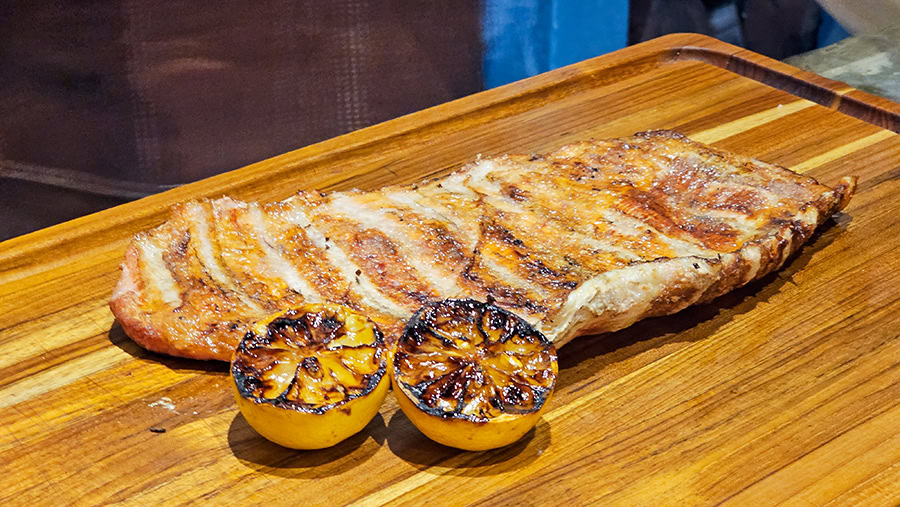
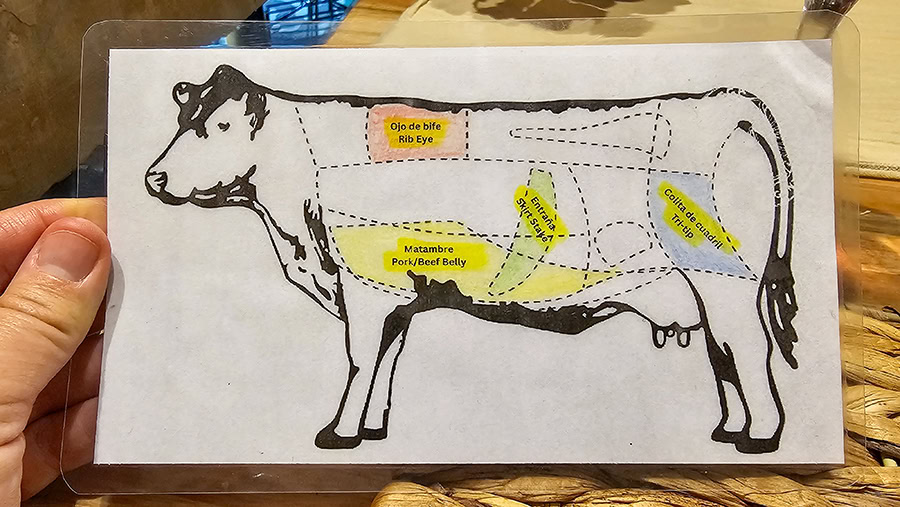
The next dish was my second favorite of the evening: matambre. The name says it all: from matar (to kill) and hambre (hungry). Hunger killer.
Betty called it pork belly. At Fogón Asado, they told me it was pork flank steak, which is the cut between the ribs and the skin. It didn’t look like pork belly. It didn’t taste like it either.
Whatever the cut, it was delicious. Light and juicy without being fatty or dry. And that clean touch of lemon didn’t hurt.
Book Your Tour: Viator or Get Your Guide
Dish 5: Ojo de Bife (Ribeye)
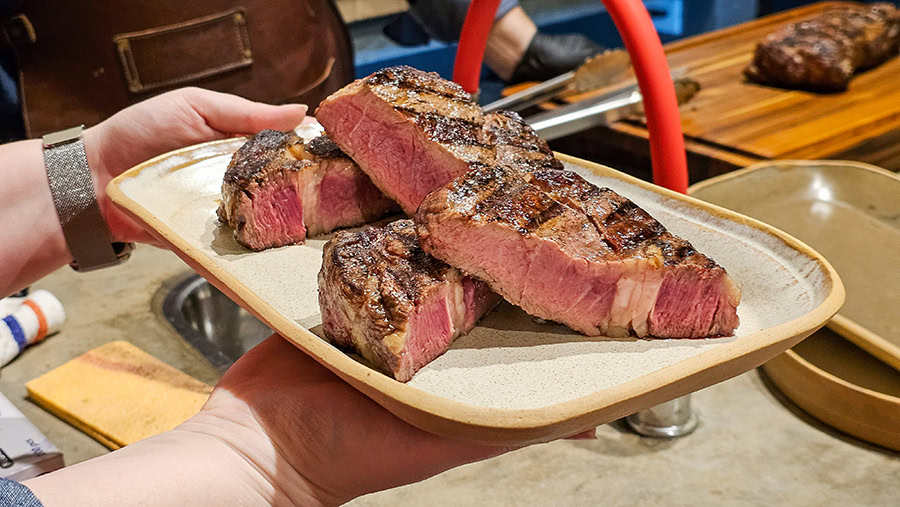
Ojo de bife means “eye of beef.” This is Argentina’s answer to ribeye. This was my favorite dish of the evening.
It was cooked as perfectly as a piece of meat can be cooked. The exact level of rareness I like. I could have dipped it in chimichurri or criolla sauce. It wasn’t necessary. It was that good.
A week later, I ordered ojo de bife at a famous Buenos Aires steakhouse, convinced I was about to relive that dinner. I was disappointed.
Determined, I tried another steakhouse. Ordered it again. Disappointed again.
Here’s the thing: Marcelo’s version ruined steak for me. Forever.
One note before you order: don’t confuse ojo de bife with bife de chorizo. Similar name, different cut, different price. Ojo de bife is the ribeye — more buttery, richer, and more expensive. Bife de chorizo is sirloin.
Dish 6: Colita de Cuadril (Trip- Tip)
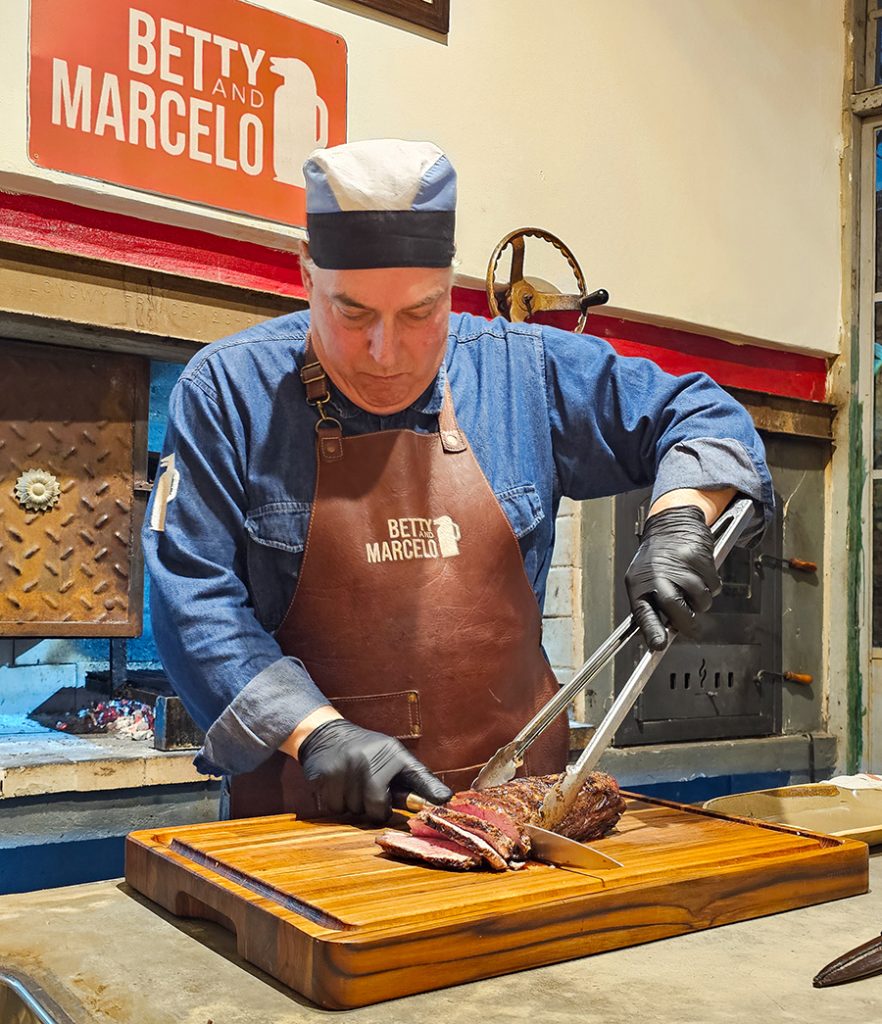
By dish six I was genuinely full. But I had seconds anyway. That says everything. And this is from someone who doesn’t even really like steak all that much.
Colita de cuadril translates as “tail of the rump.” As Marcelo was cutting it, it did indeed look like a rump. North Americans would know the cut as tri-tip. This is a leaner cut with most of its fat on the outside. You don’t get that marbling like ribeye or sirloin.
From my research, colita de cuadril isn’t as commonly eaten at asados as other cuts of meat. I also rarely see it on restaurant menus.
Book Your Tour: Viator or Get Your Guide
After Dinner: Fernet, Malamado, and Dulce de Leche
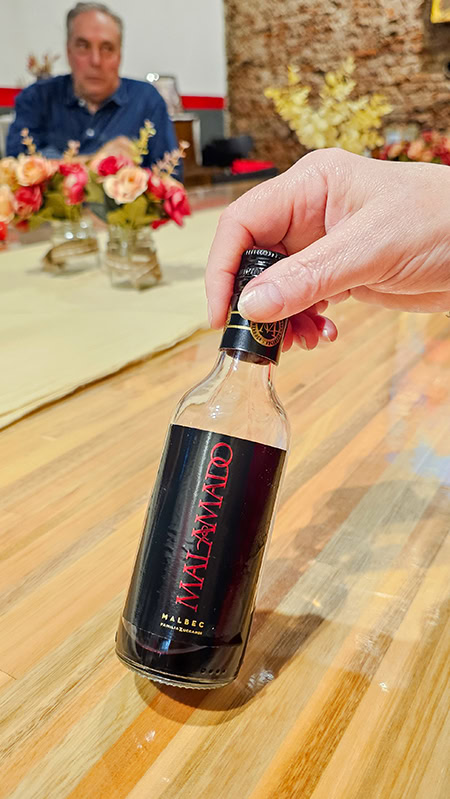
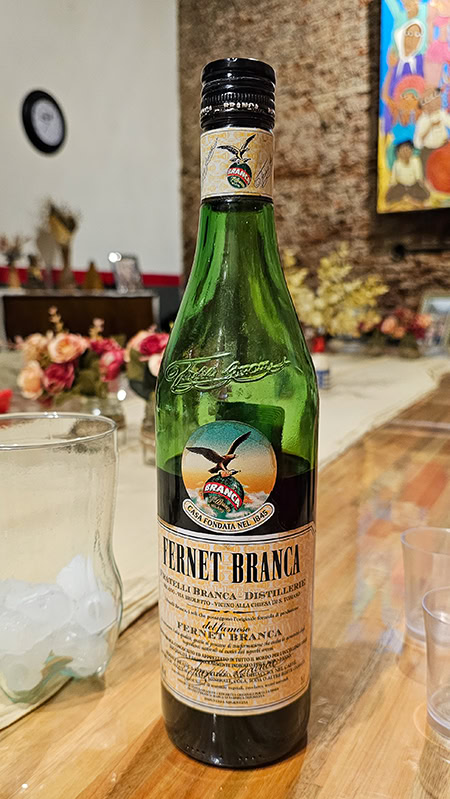
The post-meat stage of the night came with dessert (a dulce de leche ice cream bar) and two drinks.
- Malamado – A sweet dessert wine that came in a shot glass.
- Fernet – A bitter herbal liqueur that Argentinians drink after meals. It’s supposedly good for digestion. By itself, it tastes like licorice. Locals like to mix it with Coca-Cola. I tried it and I will say I surprisingly liked it better than the malamado. Would I order it again? Probably not on my own. But I’m glad I had the opportunity to try something that is part of Argentinian culture. That’s why I did this tour.
I left at 10:09 PM. Three hours, start to finish.
My Verdict: A++
Betty and Marcelo’s Asado beats the other tours for three reasons.
The food. Better than any steak or meat I’ve had at a restaurant in Buenos Aires. The quality of the meat, the quality of the cooking. Marcelo is a master. This was one of the best meals of my life, and I don’t say that lightly. I also got to try dishes, like blood sausage and fernet, that I would never have ordered on my own.
The education. Betty, Marcelo, and Veronica know asado deeply and share that knowledge openly. I watched every cut of meat go from raw to plated. I understood, for the first time, why asado is more than just food in Argentina. For me, that’s what travel is for.
The people. This is their business, and they’ve been running it for a year. Enough time to know what they’re doing. Not so long that they’ve gone through the motions. They put 110% in. You feel it from the moment Veronica opens the door. Most importantly, they made you feel like you were having an asado with a family.
One more thing on price. At $110, this tour is not cheap. But it includes wine, which the Fogon Asado dinner does not. Factor that in and the gap closes fast.
Don’t overthink this one. Book it.
Are you on Pinterest?
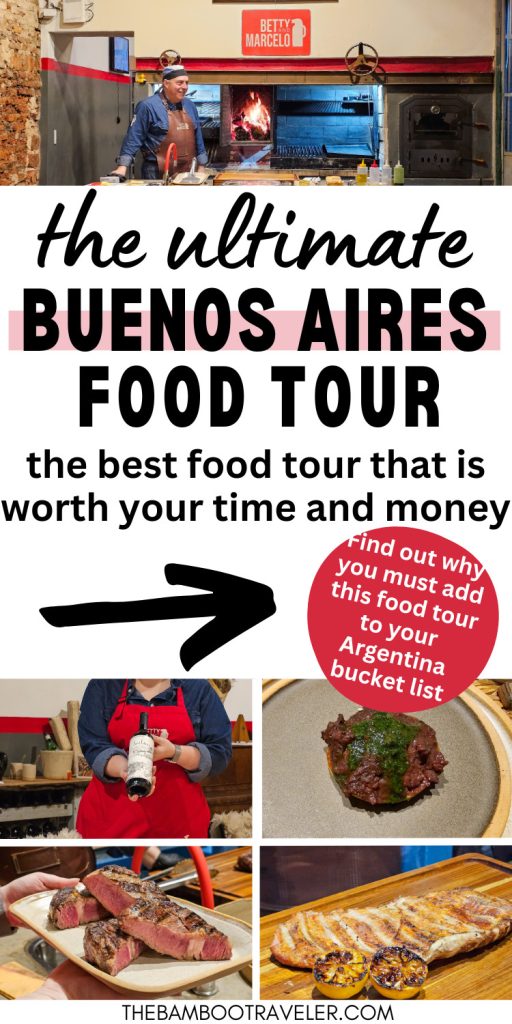
Hey! How about saving one of these pins to Pinterest to read for later?
And feel free to follow me on Pinterest, where you’ll find lots of travel articles for everywhere around the world.
Travel Resources for South America
Colombia
- Medellin Tours Worth Your Time and Money
- Medellin Itinerary: 4-6 Days in the City of Eternal Spring
- Bogota Tours That Are Worth Your Time and Money
- 22 Best Places to Visit in Colombia
- The Best (And Worst) Books on Colombia: Read Before You Go!
Ecuador
- Ecuador Destinations To Add To Your Bucket List
- Ecuador Cuisine: Top 40 Dishes That You’ve Gotta Try
- Ecuador Reading Challenge: 25 Books You’ve Gotta Read
- Quito Day Trips That Are Worth Your Time and Money
- Quito Itinerary for Culture, Food & History Lovers
- Quito Bucket List Experiences: 44 Things That You’ve Gotta Do!
- Quito Tours That Are Worth Your Time and Money
- Quito Street Food Tour That You’ll Love
- Papallacta Travel Guide: How to Get There and Where to Stay
- Galapagos Packing List
- Galapagos Itinerary and Cruise Review: Galapagos Western Islands
- Galapagos Itinerary and Cruise Review: Galapagos Eastern Islands



0 Comments