You’re planning a trip to Peru with a stop in Lima.
You’ve probably heard that Peruvian food is the BEST in South America — and that Lima is the best place to try it.
So naturally, you’re thinking about doing a food tour.
But then you see the price.
$128.
$105.
$99 when I booked it.
And you hesitate.
That’s exactly how I felt when I was debating whether to book the Exquisito Peru Food Tour in Lima. I stared at the price for days and didn’t actually book it until the morning of the tour.
Because let’s be honest — if you’re going to spend over $100 on a food tour, it better be good.
You want to try the most iconic Peruvian dishes. You want to learn something meaningful about the cuisine. And you want the food to actually taste amazing instead of watered-down tourist portions.
So here’s my honest review of the Exquisito Peru Food Tour in 2025: where we went, what we ate, what the guide was like, and whether it’s truly worth the money.
(For context, I also did this company’s food tour in Arequipa — so I had something to compare it to.)
Disclosure: This post may contain affiliate links. As an Amazon Associate and a Bookshop.org Associate, I earn from qualifying purchases. Please see this website’s Disclosure for more info.
How to Book the Tour
I booked through Get Your Guide, but it’s also available on Viator. I paid US$99. It’s currently around $105.
I like booking through platforms like these for three reasons:
- If something goes wrong (guide doesn’t show up, pickup confusion, etc.), there’s a third party to help resolve it.
- You can cancel up to 24 hours in advance.
- If it’s a bad or good tour, you can let other travelers know by leaving a review.
I’ve had enough minor tour mishaps over the years to appreciate that safety net.
Now the big question…
Was this one worth it?
The Tour Experience
We met at 11:00 AM in Plaza San Francisco in the Barranco neighborhood. Most food tours don’t offer hotel pickup, so this meeting point was normal. I was staying in Miraflores and walked about 30 minutes to the meeting point — easy and pleasant.
The plaza is small, so spotting our guide and the five other people on the tour was easy.
Our guide, Aura, was 24 years old — professional, enthusiastic, patient, and genuinely knowledgeable. She answered every question we threw at her.
It was a Saturday morning, and Barranco still felt sleepy. Quiet streets. Closed shutters. It was the perfect time to explore before the crowds arrived.
Stop #1 – Ingredient Tasting Room
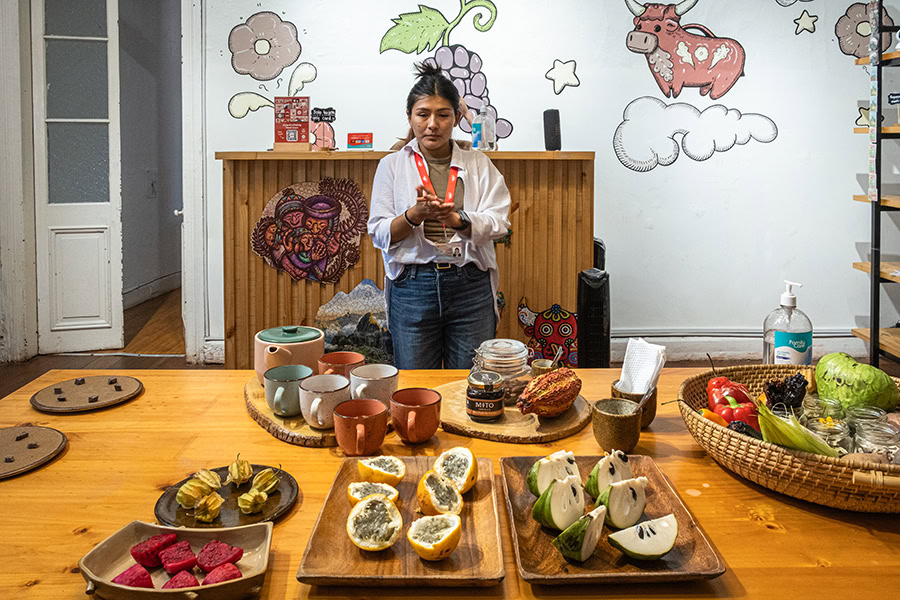
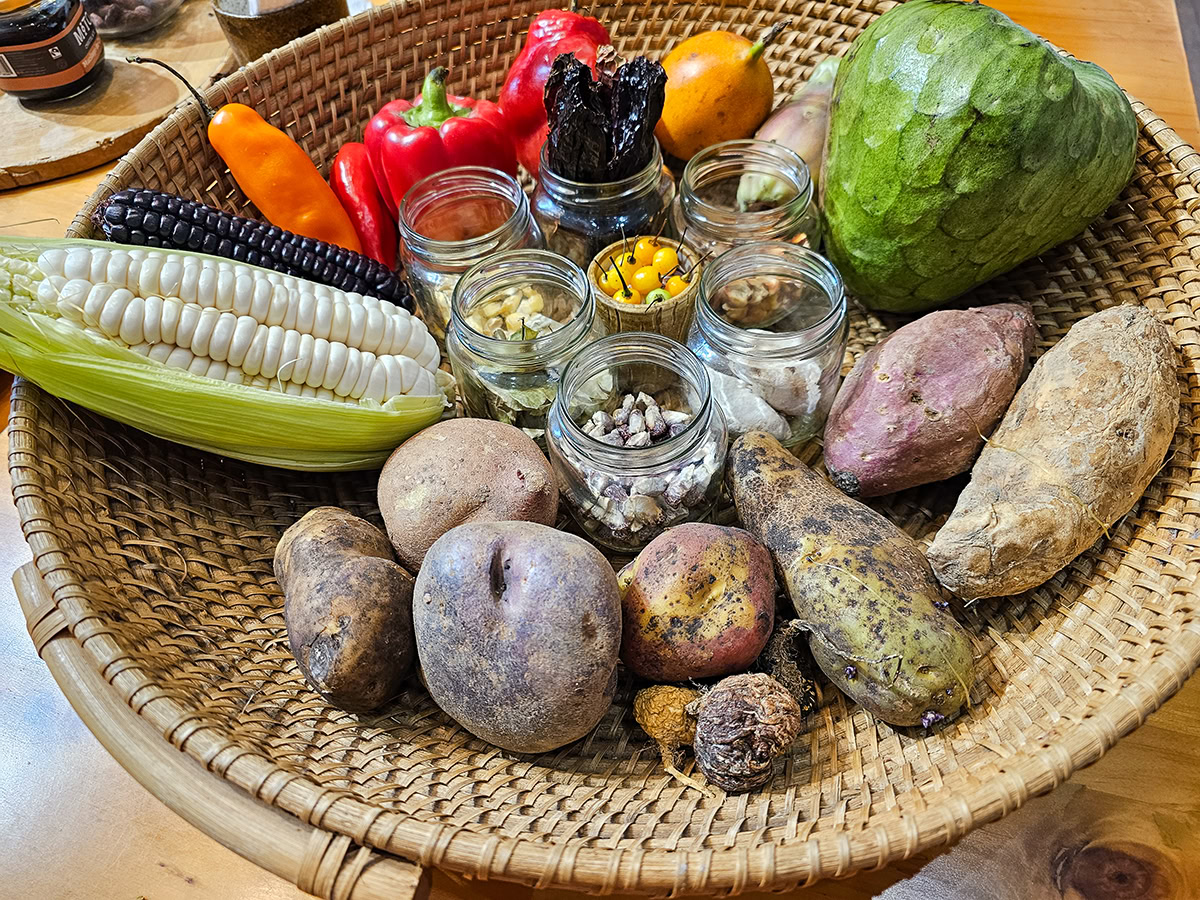
Our first stop was upstairs near Ancestral Barranco Café in what felt more like a private tasting room than a restaurant. The shelves were lined with Peruvian chocolates. In the center was a large communal table with potatoes, fruits, and cacao laid out in front of us.
I LOVED that this tour started with ingredients.
Most food tours jump straight into the dishes. This one taught us the foundation of Peruvian cuisine first.
Aura explained how cacao becomes chocolate. We tasted three chocolates from different regions of Peru (Peru is actually the second-largest chocolate producer in South America). We even tried the mucilage — that white, sweet, slightly slimy layer around the cacao bean — and surprisingly, it was delicious.
We finished with cacao tea.
Then came four exotic fruits that you will not find in North America, Australia, Europe, or East or Southeast Asia:
- Tuna (prickly pear)
- Uvilla (gooseberry)
- Granadilla (milder passion fruit)
- Chirimoya (custard apple)
Finally, we dove into Peru’s two culinary pillars: potatoes and chili peppers.
Peru has around 3,000 types of potatoes. I still can’t get over that number. I recommend later on touring a market in your Peru trip to see all the variety of potatoes.
It has three core Peruvian chilies: aji amarillo, aji panca, and rocoto. These chilies are what truly make the flavors of the cuisine so distinct. The only other country I’ve seen these chilies in is Bolivia.
This was such a smart way to begin. It was educational without being boring and interactive without feeling staged.
My Verdict: A+
Stop #2 – Coffee & Empanada at Alanya Café
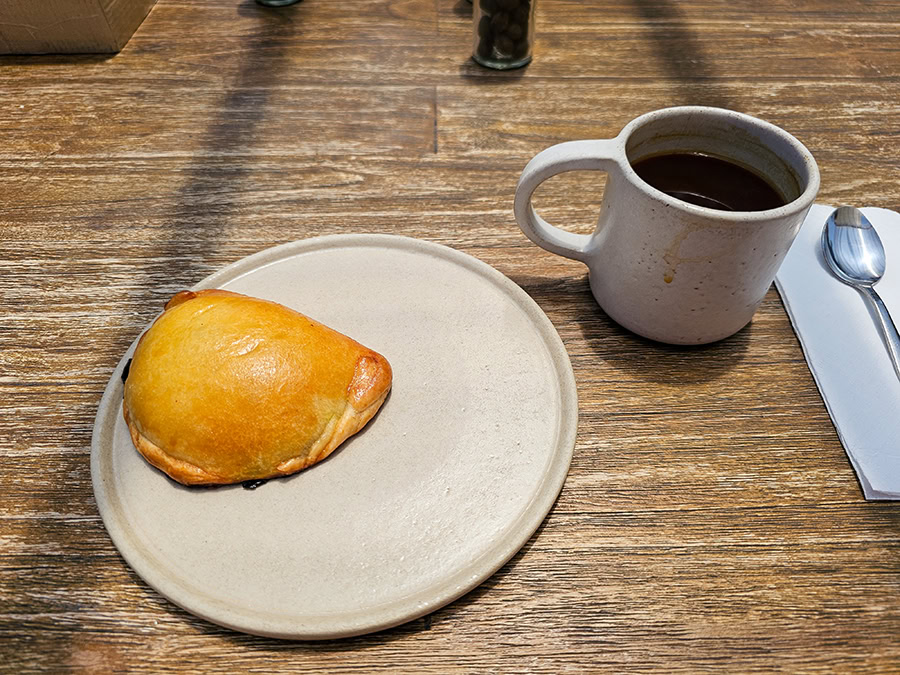
Next stop: Alanya Café, a typical trendy café in Barranco. On this Saturday morning, there wasn’t an empty table in sight.
We were taken up to a quieter rooftop space, which felt like a VIP escape from the crowd.
Here we learned about Peruvian coffee production methods: honey, natural, and washed. Then we tasted a high-quality coffee alongside an empanada filled with aji gallina (chicken with a sauce made from a yellow chili pepper called aji amarillo—we just learned about the pepper at the previous stop).
I’ve eaten a LOT of empanadas in South America.
This one? Possibly the best I’ve had. And I found out later when I returned to the café that it’s not even on the regular menu. It was made specifically for the tour.
At this point, I was already impressed. Good food. Real education. No cutting corners.
My Verdict: A+
Stop #3 – Ayahuasca Restobar (Cooking Demo!)
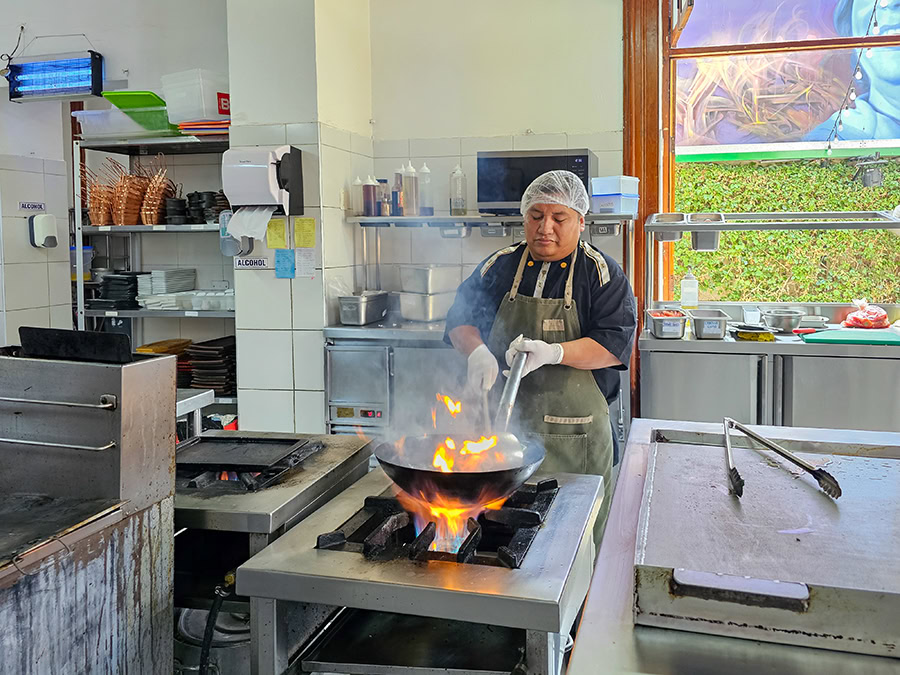
I’d say that this was where the tour jumped from “good” to “wow.”
We visited Ayahuasca Restobar (a combination restaurant and bar) before it opened for the day. We were taken straight into the kitchen for a cooking demonstration.
I rarely see demos on food tours in Latin America. Or anywhere for that matter.
The chef demonstrated how to cook one of Peru’s most popular dishes: lomo saltado (jumping beef). The dish is a fusion of Chinese and Peruvian cuisine. The key ingredients are beef, red onion, tomatoes, soy sauce, beef stock, and yellow chilies. It is cooked quickly over a high flame in a wok.
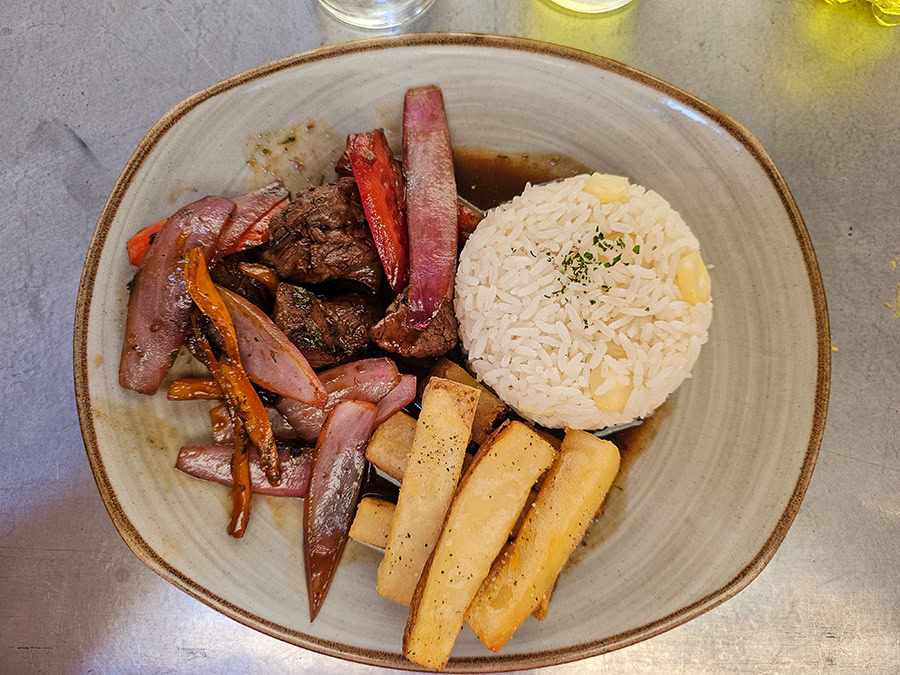
And here’s my honest confession:
I’ve had lomo saltado many times in Peru. I was often underwhelmed. The beef was usually mediocre and the taste was too sweet.
This version? The best I’ve ever had. Even to this day.
High-quality meat. Perfect seasoning.
Then he made anticuchos (grilled beef heart skewers).
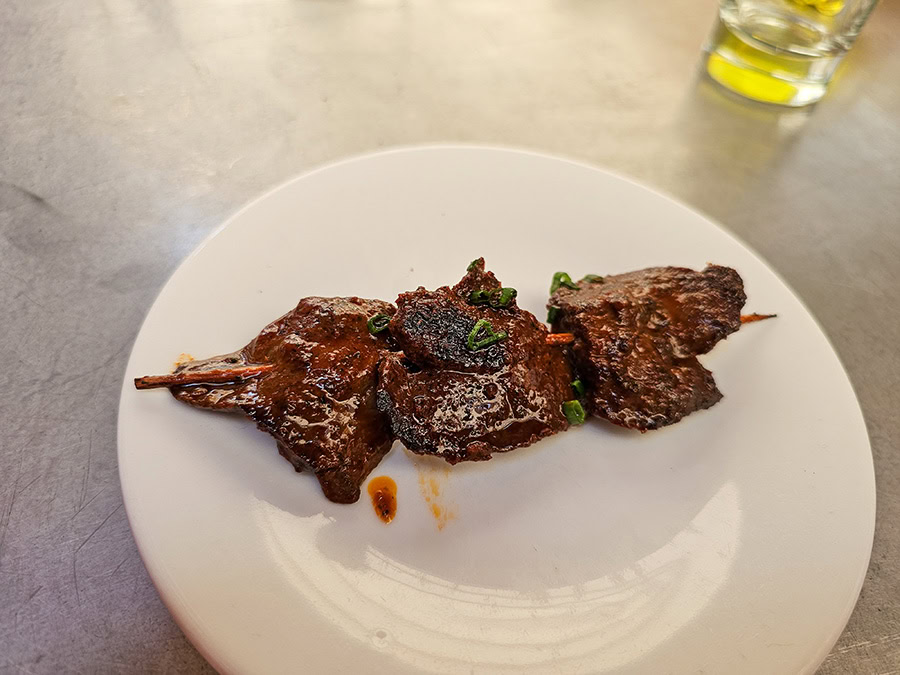
I know. Beef heart doesn’t sound appealing.
But anticuchos, when done properly, are smoky, tender, and covered in rich chili sauce. They’re classic Peruvian street food.
At this point, I realized something important: they were not cutting costs on ingredients.
Many food tours I’ve done in Latin America clearly use cheaper versions of dishes. This one didn’t.
We paired everything with Inka Cola, Peru’s bright yellow national soft drink.
Educational. Delicious. Interactive.
My Verdict: A++
Stop #4 – Bridge of Sighs & Murals
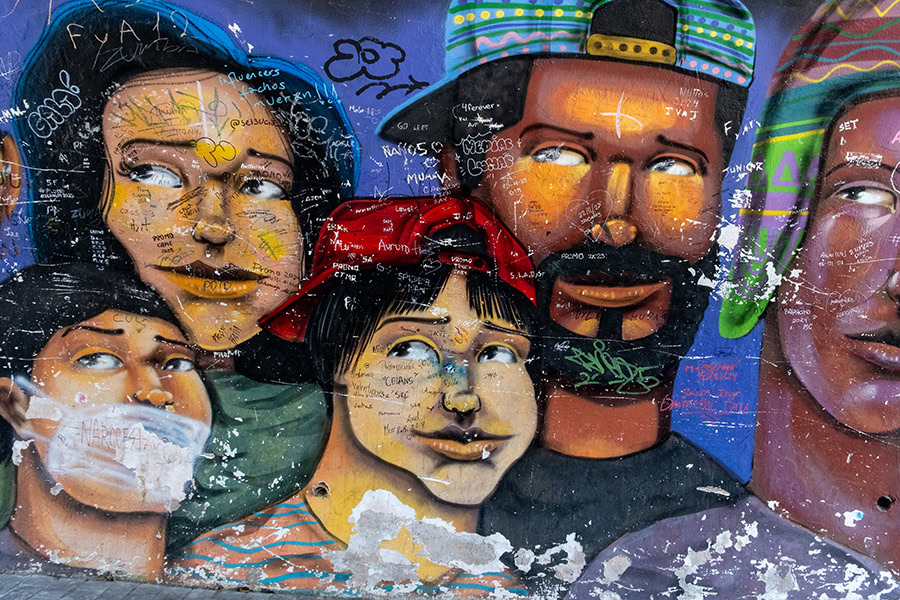
Aura wisely gave our stomachs a break.
We walked to the Bridge of Sighs (built in 1876), one of Barranco’s most famous landmarks. There’s a legend that if you hold your breath while crossing and make a wish, it will come true. Sorry to say that it doesn’t work.
The area is charming with its galleries, trendy shops, cool cafes, colonial architecture, parks, and ocean views.
But what I appreciated most were the murals. Aura explained the meaning behind several of them, tying them into Lima’s cultural and political history.
The stop at the bridge and then inside a gallery was a smart pacing decision.
Even if you skip this tour, come here.
My Verdict: A
Stop #5 – Ceviche at República de Pisco
I didn’t think it was possible for the tour to get any better.
It did.
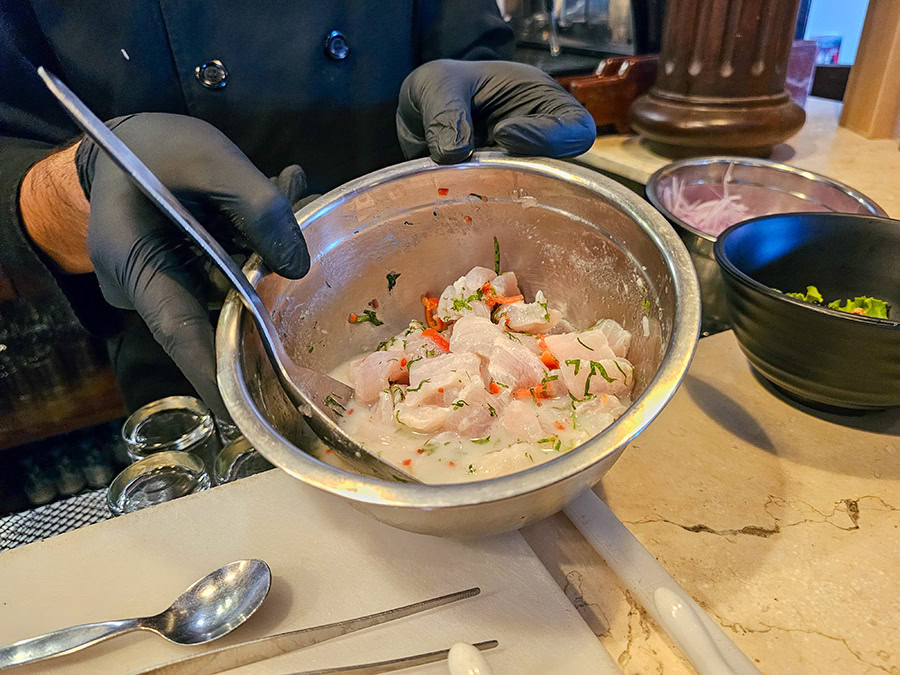
We were rewarded with another cooking demonstration. This time it was ceviche.
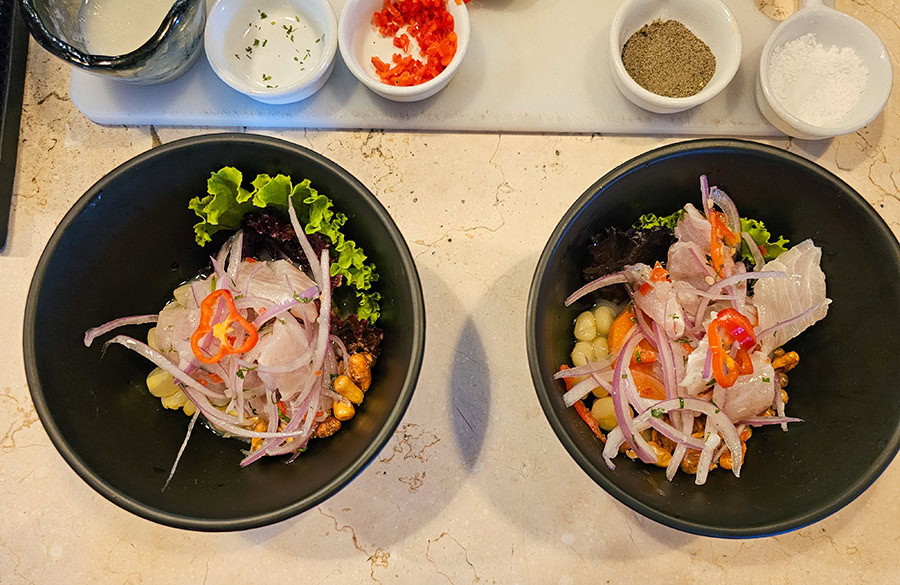
The chef spoke English and walked us through every step: raw fish, onion, cilantro, chili, salt, tiger’s milk (lime juice + fish juice), sweet potato, giant Peruvian corn.
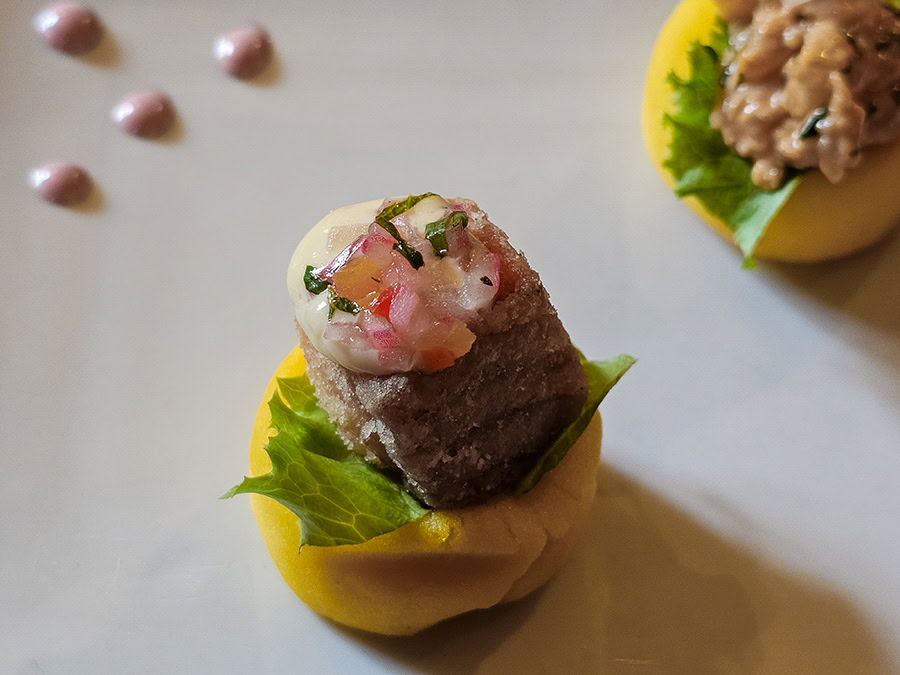
Before the ceviche, we had another typical Peruvian dish called causa. I love causa. It is a layered cold potato dish with avocado and tuna, chicken, or langoustines.
We had two causas: tuna and chicken. Both were excellent.
And the ceviche? Among the best I had in Lima. It was fresh, balanced, and not overly acidic.
At this point, I stopped comparing and just accepted that this tour was consistently excellent.
My Verdict: A+++ (Highlight of the tour)
Stop #6 – Pisco at Juanito’s
No food tour in Peru is complete without at least one pisco sour.
That should be a rule.
And I was not disappointed.
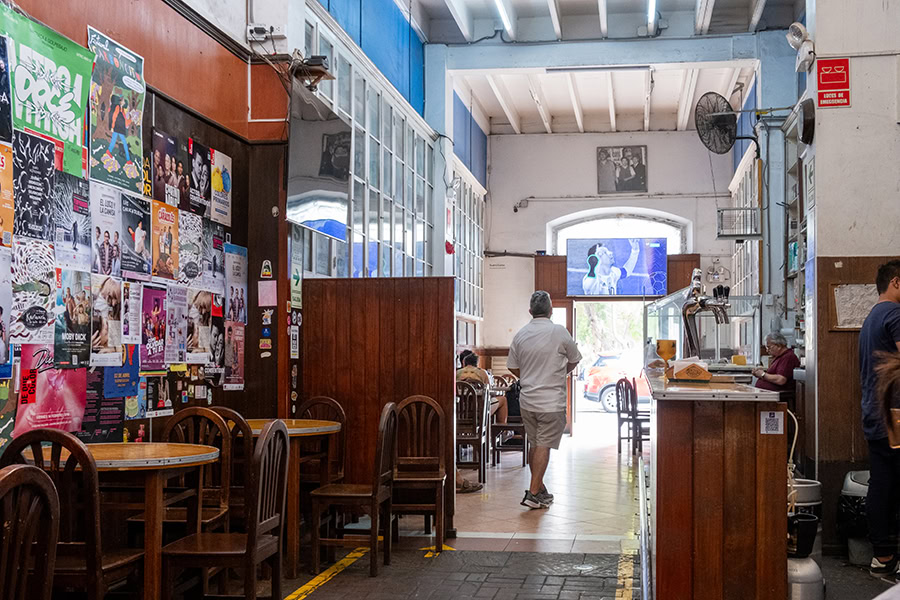
We went to Juanito’s, which is an old-school tavern owned by a local family for three generations. It literally has no sign outside. I suspect it probably has no name to deter tourists. Peruvians know about it, but our guide said that foreigners haven’t found it yet.
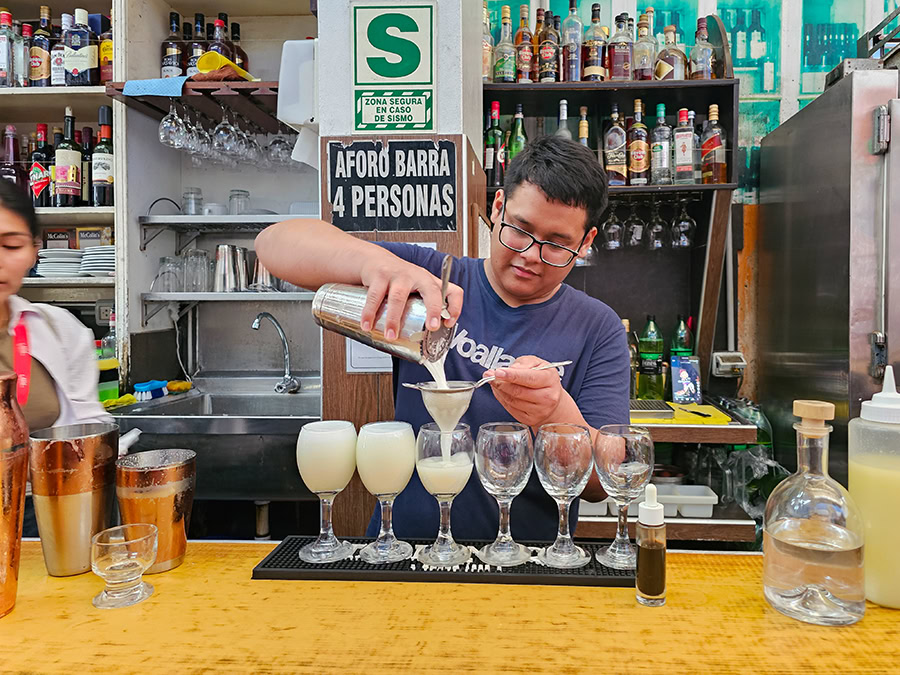
The bartender demonstrated how he makes his pisco sour:
- 3 oz pisco – a grape-based liquor similar to brandy
- 1 oz sugar syrup
- 1 oz lime juice
- Egg white
- Bitters
This was my third pisco sour demo, and the amounts of each ingredient have been different every time. Every bartender seems to tweak the ratios slightly.
This one was the perfect balance. Not too sweet. Not too sour.
One of the best I’ve had.
My Verdict: A++
Stop #7 – Ice Cream at Blu
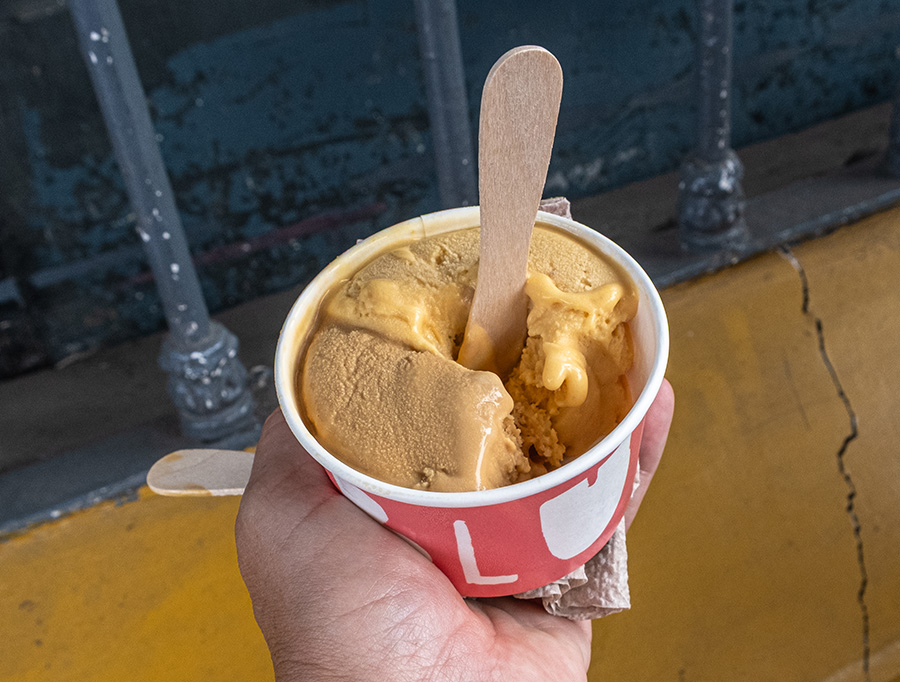
We ended the food tour with dessert at the popular Blu Ice Cream Shop.
I ordered two flavors: caramel and lucuma.
Lucuma is a fruit that you MUST try while in Peru. I’ve only seen it in Peru. The taste and texture are unforgettable. The fruit has a green exterior and a golden-yellow interior. The texture is thick and creamy like an avocado, and the taste is mildly sweet like a mixture of caramel, maple syrup, and sweet potato.
In ice cream form? Incredible.
It was a sweet and satisfying ending to one of the best food tours I’ve had in Latin America.
My Verdict: A+
Final Verdict: Is It Worth It?
Yes.
Absolutely yes.
This tour with Exquisito is easily one of the top three food tours I’ve done in Latin America (the others being Oaxaca and Quito).
The quality of food was genuinely high. The stops were thoughtful. The pacing was perfect. I never felt rushed, hungry, or overly stuffed.
I tried all the most iconic Peruvian dishes and drinks:
- Lomo saltado
- Empanadas
- Causa
- Anticucho
- Ceviche
- Pisco Sour
- Inka Cola
And most importantly, I learned a lot about Peruvian cuisine.
That’s what separates a good food tour from an average one.
If I had one small suggestion: I wish we had stopped to try maca. We passed a stand, and Aura explained it, but we didn’t taste it. Maca is commonly consumed in Peru, and I always like trying everyday foods — not just restaurant dishes.
But that’s a minor point.
If you’re hesitating because of the price, I understand.
I hesitated too.
But in this case, it was money well spent.
You can book this tour through Get Your Guide or Viator. Exquisito also has a food tour in Arequipa.
Are you on Pinterest?
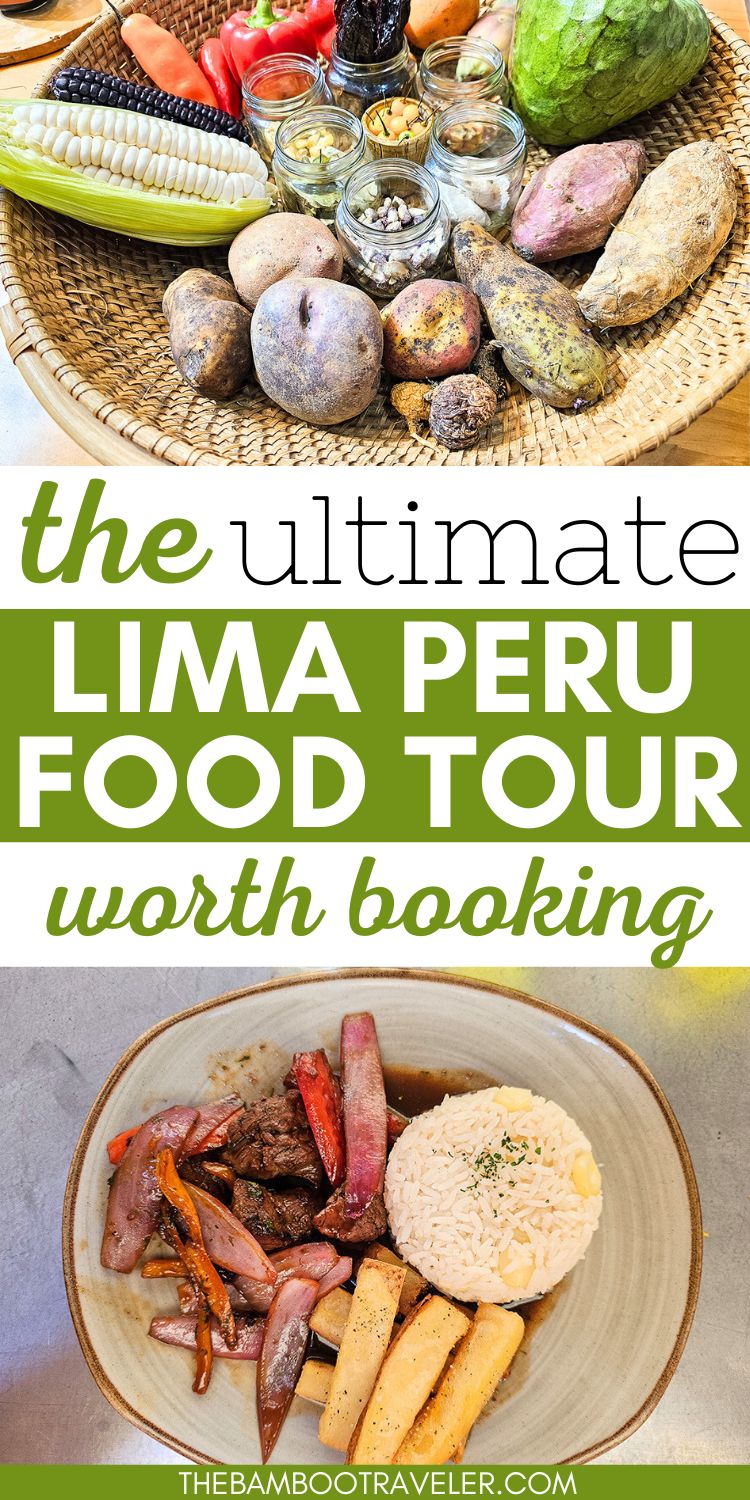
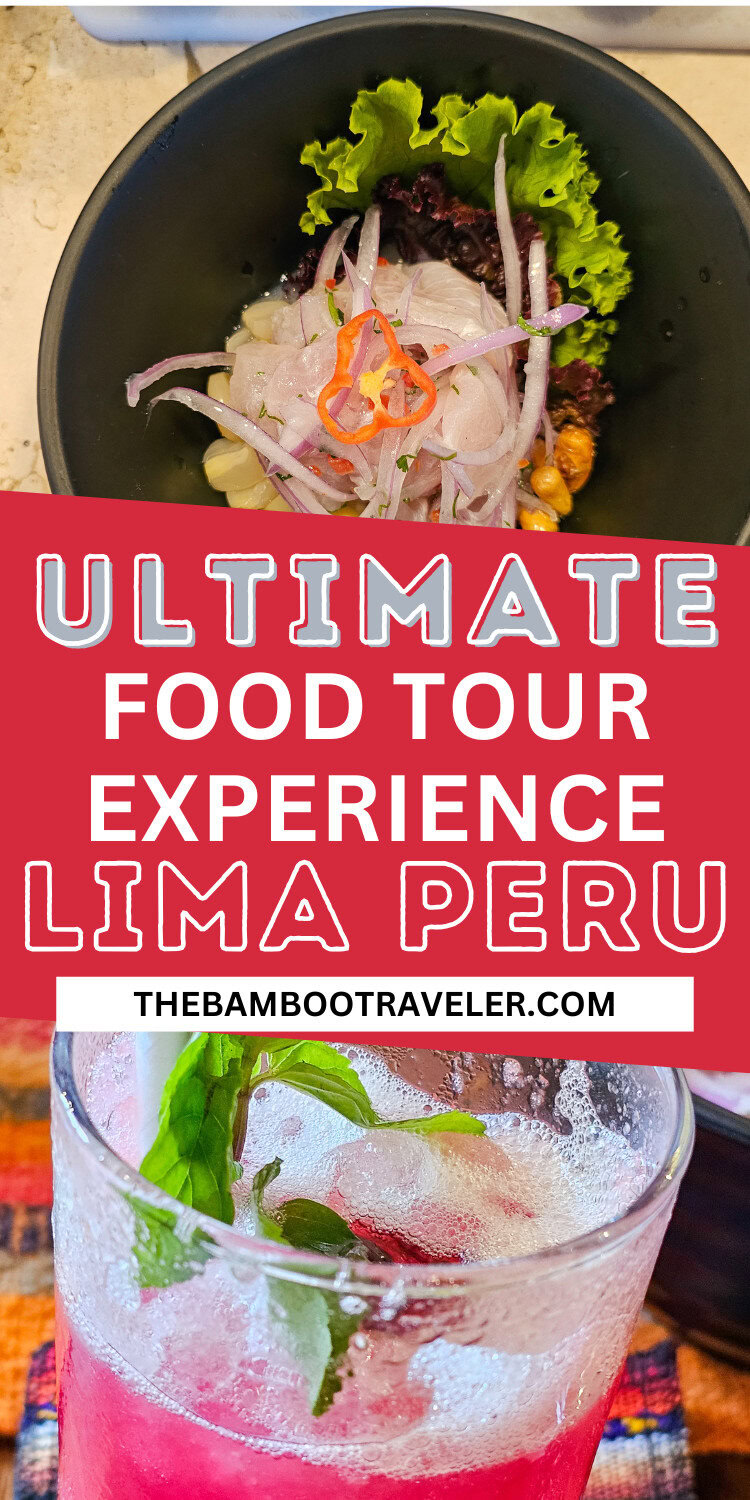
Hey! How about saving one of these pins to Pinterest to read for later?
And feel free to follow me on Pinterest, where you’ll find lots of travel articles for everywhere around the world.



0 Comments