
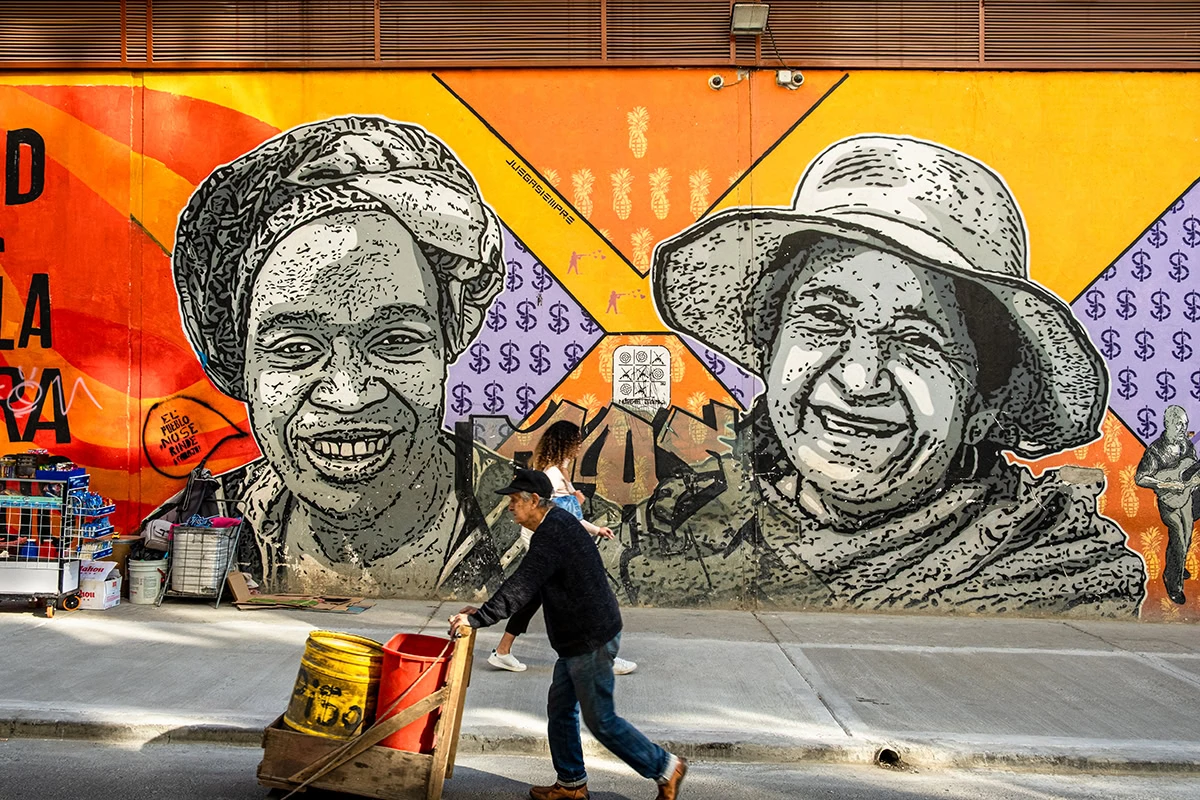
I’ll be honest. Before I arrived in Bogotá, I had pretty low expectations.
I’d heard too many negative things. That it was dangerous. That it was overrated. That it was a bit rundown. That it was just a stopover city on the way to Medellín or the Coffee Region.
I was wrong on all counts.
Bogotá turned out to be one of the most fascinating, layered, and flat-out surprising cities I visited in all of Colombia. And the reason I feel that way has everything to do with the tours I took.
- A walking tour that made the history that I had only knew about in books come alive.
- A graffiti tour that was more politically intelligent than most museums I’ve visited.
- A war and peace tour that will make you appreciate the resilience of the people of this beautiful country.
- A food tour, a fruit tour, and a coffee workshop that between them will make me like Colombian food more than ever before.
- A bike tour that finally gets you out of La Candelaria and into the city’s real neighborhoods.
- And one final experience so unique that you’ll be showing off the result for the rest of your life.
With a great tour, Bogota is going to make more sense. You’ll appreciate it more. You’ll understand it more. Why does the city look the way it does? Why are Colombians so resilient? Who are those shady-looking guys hanging out in plazas and street corners? And most importantly, why do they put cheese in their hot chocolate?
And maybe you’ll learn to love it.
In this guide, I’m sharing the 8 best tours in Bogotá. These are the ones worth your time and money, and the ones that will make you feel like you actually know this city when you leave.
Disclosure: This post may contain affiliate links. As an Amazon Associate and a Bookshop.org Associate, I earn from qualifying purchases. Please see this website’s Disclosure for more info.
1. Walking Tour of the Historic Center

If there’s one piece of advice you take from this entire guide, let it be this:
Start your time in Bogotá with a walking tour of La Candelaria.
Not because it’s the most exciting thing on this list. But because without it, you’ll spend the rest of your trip misunderstanding the city.
Here’s the question that will stick with you the moment you step into the historic center: why does a 400-year-old city look like it was built in the 1960s and 70s? The answer is a fascinating one, and it will reframe everything else you’ll see in Bogotá. The politics, the architecture, the street art, the resilience of the people. It all connects.
A great walking tour of La Candelaria will give you a deeper appreciation for the people of Bogota.
I did mine with Beyond Colombia, one of the most reputable tour companies in Bogotá. They offer six different tours in the city, and I ended up doing four of them. That tells you something.
My guide, Rafa, was professional, patient, and genuinely passionate about his city. He hit all the historically and culturally important landmarks in La Candelaria, but also took us to a few hidden corners I never would have found on my own.
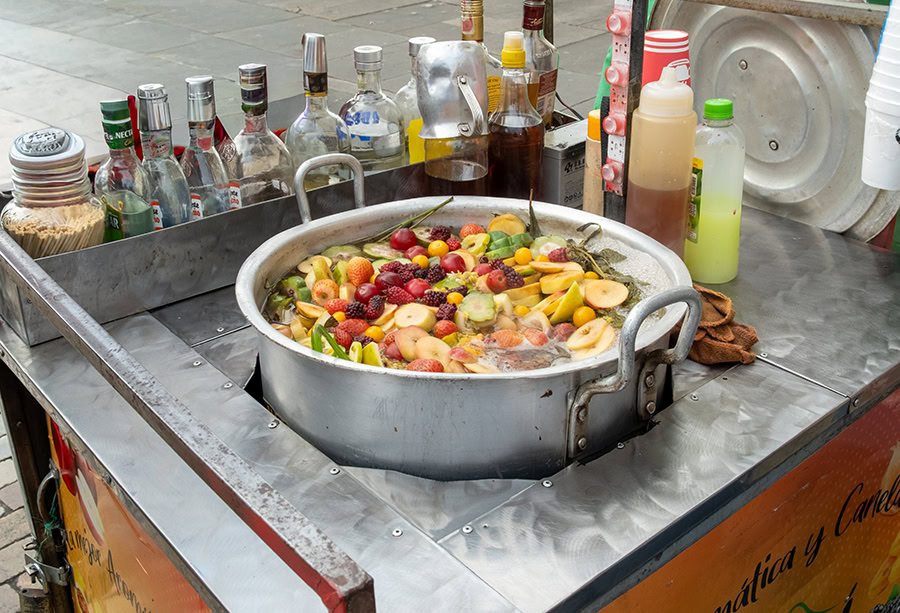
Along the way, we tried two drinks that are as Bogotá as it gets: chicha, the indigenous fermented corn drink that dates back to pre-colonial times, and canelazo, a warm, spiced drink made with fruit, cinnamon, and panela. Alcohol optional.
I booked directly through the website, which means you pay in cash as a tip at the end of the tour. However, you can avoid worrying about how much to tip by booking the same tour through Viator or Get Your Guide.
Another well-regarded option is Gran Colombia Tours, which also runs regular walking tours through La Candelaria with knowledgeable local guides.
Whichever company you choose, just go. Do this first. Everything else on this list will make more sense because of it.
2. Graffiti and Street Art Tour

The walking tour gave you Bogotá’s history.
The graffiti tour gives you its soul.
Street art in Latin America is not just decoration. It’s a way that artists, activists, and citizens communicate with each other about their shared politics, history, and identity. And if you want to understand what a city is really saying, you its walls instead of its newspapers.
By that measure, Bogotá has one of the loudest voices in Latin America.
I’ll say this without exaggeration: Bogotá’s street art ranks in the top three in all of Latin America for both quality and quantity. It’s not even close. The murals here are more political and emotional than anything I saw in Medellín, Cali, or Cartagena.
But here’s the thing: you won’t fully appreciate any of it without a guide.
I took mine with Capital Graffiti Tours. Our guide opened with something I genuinely didn’t know: the difference between graffiti and a mural. It sounds like a minor distinction. It isn’t. Understanding the difference completely changes how you look at everything on the walls around you.
From there, we looped through La Candelaria. We went into corners I’d already walked past without a second glance and then to rougher, grittier streets of the city where some of the most powerful pieces live. For each work, the guide unpacked the story: the history behind it, the symbolism embedded in it, and the artist who made it.
You can book through Get Your Guide or Viator, or directly with Capital Graffiti Tours.
Do the walking tour first. Do this one second. In that order, Bogotá starts to make complete sense.
3. Conflict History Tour

The walking tour gave you Bogotá’s history. The graffiti tour showed you how the city processes it.
This tour explains why there’s so much to process in the first place.
Colombia’s story is not a simple one. Most countries endure one civil war. Colombia has had eight! The last conflict, which involved the FARC guerrillas, paramilitary groups, and the government, is technically still ongoing and has left over 450,000 people dead. Before that came La Violencia (1948–1959), ignited by the assassination of presidential candidate Jorge Eliécer Gaitán right here in Bogotá. This was an event so catastrophic that it triggered a riot that literally burned the city to the ground. That’s your answer, by the way, to the question the walking tour raised: why does a 400-year-old city look like it was built in the 1970s.
Now it clicks.
Beyond Colombia’s Conflict History Tour takes you through the historic center, stopping at the key sites where this history unfolded. The tour connects the dots between Colombia’s past and its complicated present.
Now, here’s my honest take. If you’ve read any of my other posts, you know that I’ll give it to you straight.
This was the tour I was most excited about. And it was also my most disappointing experience in Bogotá. My guide leaned heavily on conspiracy theories and placed the blame for Colombia’s conflicts almost entirely on the United States, which is not entirely without basis. However, it felt one-dimensional and got repetitive fast. The format didn’t help either. Too much sitting and listening to lectures, not enough moving through the city.
But…
A fellow traveler who did every single tour on this list alongside me called this one of her favorite.
So the tour itself isn’t the problem. The guide makes or breaks it.
If you get an engaging, balanced guide, this could easily be the most intellectually powerful experience on this entire list. The subject matter alone guarantees it. Ask your accommodation for recent reviews, or check the latest comments on Get Your Guide or Viator before you book. Guide names are sometimes mentioned in reviews, and it’s worth doing that extra five minutes of research. Also, the same guide doesn’t do the same tour every day.
Don’t skip this tour. Just choose wisely.
You might be interested in these posts for your trip to Colombia:
4. Colombian Food Tour

By now, you’ve walked the historic center, decoded the street art, and sat with the weight of Colombia’s history.
It’s time to eat.
I have a travel philosophy I live by: you cannot truly understand a country until you understand what it puts in its stomach. Food is history, culture, identity, and pride all on one plate. Which is why I always, without exception, do a food tour when I arrive somewhere new.
In Bogotá, I did three.
Here’s why. First, Bogotá has the best food in Colombia. It’s better than Medellín, better than Cartagena, and more diverse than anywhere else in the country. Second, food tours here cost around $50 USD, which is roughly half what you’d pay for a comparable food tour in Lima, Oaxaca, or Buenos Aires. At that price, doing more than one isn’t an indulgence. It’s research.
These are the three I took, ranked honestly:
🥇 A Chef’s Tour — The Best
This is the one I recommend without hesitation. It was one of the most memorable food experiences I had in all of Colombia. The highlight was a stop at La Perseverancia Market. This is a completely local market featured on Netflix’s Street Food: Latin America. My group of three plus guide were, without exaggeration, the only foreign tourist in sight. We visited more stops, sampled more dishes and drinks, and covered more ground around the city than either of the other tours. It’s the most expensive of the three. It’s worth every peso. I booked my tour through Get Your Guide, but you can also do it through Viator.
🥈 Beyond Colombia Food Tour — Best for Budget Travelers
On this tour, you just pay the guide for her service, but you pay for your own food. It keeps the cost low. And you determine what you eat and how much you eat.
Overall, the guide was US$15 and the food was US$14. I booked my tour through the Beyond Colombia website and then paid for the guide in cash as a tip. However, if you want to avoid the whole “how much should I tip” conundrum, then book through Get Your Guide or Viator. In this way, you’ll pay a fixed amount upfront for the guide but still pay for your own food.
Overall, it’s a solid introduction to Bogotá’s food scene and a good option if you’re watching your budget.
I liked this tour a lot, but if you’re like me and food is your passion, the upgrade to A Chef’s Tour is worth it.
🥉 The True Colombian Experience — The Most Unique Concept
This tour takes a different and genuinely interesting approach. Instead of focusing on one neighborhood, it visits restaurants from each of Colombia’s distinct regions, giving you a taste of the country’s full culinary geography in a single afternoon. The guide was excellent and my group was great.
The one caveat: I went around Christmas when several restaurants were closed, so I didn’t get the complete experience. Maybe if I had gotten the complete experience, it would have beaten A Chef’s Tour. I will never know.
I booked through my hostel, The Cranky Croc (I highly recommend staying here!). But you can also book online through Viator or Get Your Guide.
Any one of these is a great choice. But if you can only do one, make it A Chef’s Tour. And if you can do two, add The Beyond Colombia tour for the sheer variety. Or do all three!
Your stomach will thank you. So will the rest of your Bogotá trip.
5. Exotic Fruit Tour

You’ve walked the city, read the walls, sat with the history, and eaten your way through the neighborhoods.
But there’s one more thing you absolutely cannot leave Bogotá without doing.
And it might surprise you.
A fruit tour.
I know. It doesn’t sound as dramatic as the conflict history tour or as indulgent as A Chef’s Tour. But stay with me.
Colombia is the second most biodiverse country for fruit in the entire world, trailing only Brazil. It has over 400 varieties of fruit. Four hundred! And the overwhelming majority of them have never appeared in a supermarket in North America or Europe. Not even close.
Think about that for a second. You have spent your entire life eating apples, bananas, and mangoes, and meanwhile, Colombia has been quietly sitting on one of the most extraordinary fruit ecosystems on the planet.
A visit to Colombia without trying the fruit is like visiting Japan without trying the sushi. Technically possible. Completely inexcusable.
The problem is you won’t know what to try, where to find it, or what you’re even looking at without a guide. Walk through Paloquemao Market on your own and you’ll be staring at alien-looking objects with no idea which ones are sweet, which are sour, which taste like candy, and which will make you question every fruit you’ve ever eaten before.
That’s exactly where the Fruit Tour Bogotá comes in.

I didn’t do this specific tour in Bogotá. I’d already done a fruit tour in Medellín and love it! However, I’ve met multiple travelers who raved about this one. And the numbers back it up: it consistently gets some of the best reviews of any food experience in the city.
According to the description of the tour, you’ll try 25 different exotic fruits. The guide takes you vendor by vendor through Paloquemao Market, explaining the backstory of each fruit: where it grows, how it’s eaten, what it tastes like, and why Colombians are so smug about their fruit situation. Groups are capped at just six travelers, which means it’s intimate, unhurried, and genuinely personal.
Some fruits you might encounter and almost certainly have never tried: lulo (tangy, somewhere between a tomato and a lime), maracuyá (a more intense passion fruit), guanábana (creamy, sweet, a little floral), tomate de árbol (tree tomato, which is nothing like the tomatoes you know), and pitaya (dragon fruit’s more interesting Colombian cousin).
You can book the tour through Viator.
If you did A Chef’s Tour yesterday, do this one today. Between the two of them, you’ll have a working understanding of Colombian food culture that most visitors never come close to.
If you can’t do both A Chef’s Tour and Fruit Tour Bogota, stick with the A Chef’s Tour. We actually sampled several fruits on the tour.
Whatever you do, don’t leave Bogotá without trying the fruit. You’ll regret it if you do.
6. Coffee Tasting Tour and Workshop

Let me ask you something.
When you think of Colombia, what’s the first thing that comes to mind?
And if you said Pablo Escobar, we need to have a serious conversation.
It’s coffee. Obviously.
But here’s what most visitors get wrong. They arrive in Colombia, which is one of the greatest coffee-producing countries on earth, walk into a random café, order a cup, and wonder why it doesn’t taste any different from what they drink back home.
Because they ordered wrong. And because nobody taught them how to order right.
That’s exactly what this workshop fixes.
First, let’s establish something. Colombia is not just another country that happens to grow coffee. It’s the third largest coffee producer in the world after Brazil and Vietnam but with one crucial difference: Brazil and Vietnam grow mostly robusta, a lower-quality, higher-bitterness bean that fills the cans of Folgers and the pumps of Starbucks. Colombia grows exclusively high-quality Arabica beans.
And within Colombia, Bogotá has the best coffee scene in the country. I say that after six months of what I can only describe as intense, dedicated, deeply committed coffee research across Medellín, Cali, and Cartagena. Bogotá wins for the quality of its cafés, the depth of its coffee culture, and the fact that you can walk into a specialty shop and order a cup traced all the way down to the specific farm and variety of bean it came from.
But you need to know what you’re looking at first.
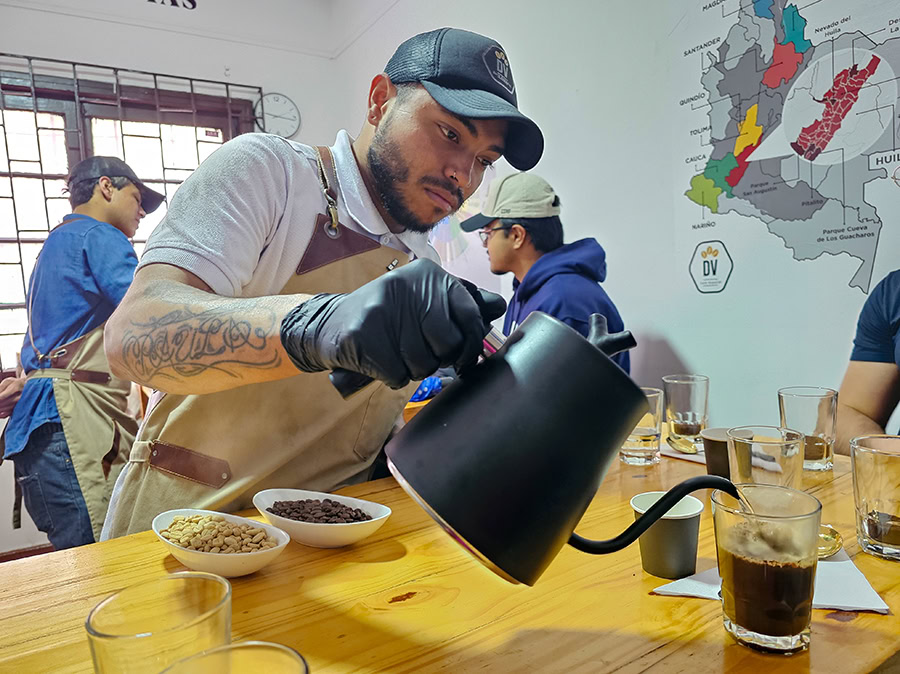
I did my coffee tasting workshop with Divino Café Especial in La Candelaria. The workshop walks you through the difference between commercial coffee and specialty coffee and not just theoretically, but through smelling and tasting side by side.
You’ll learn the different brewing methods used in Bogotá’s best cafés: the Chemex, the V60, and the one you absolutely have to see in person: the Japanese siphon method. It looks like something out of a mad scientist’s laboratory. Watching a barista use one is worth the workshop price alone.
Once you understand these methods, you’ll realize that in a good Bogotá café, you’re not just ordering a coffee. You’re choosing the bean, the origin, and the brewing method. That’s a completely different experience from anything you’ll find at home.
Workshops run daily at 9:00 AM and 11:00 AM. I walked in off the street and booked same-day, but they told me their workshops fill up fast, so book ahead to be safe. You can book through Viator.
Can’t get a spot? The other workshop that consistently gets rave reviews is at Café Cultor, a specialty café with exceptional coffee that runs its own tasting sessions. I’ve been to the café itself and the coffee is outstanding. The workshop is on my list for my next visit.
If you can’t make it to a coffee farm during your time in Colombia for the full coffee experience, this workshop is the next best thing. Do it early in your trip, not at the end. You’ll spend the rest of your time in Bogotá drinking coffee in an entirely different way.
And you will never look at a can of Folgers the same way again.
7. Bike Tour Beyond La Candelaria

You’ve spent the last few days on foot in La Candelaria.
Time to see the rest of the city.
And the best way to do that in Bogotá?
Two wheels.
Most tourists never leave La Candelaria. They circle the same historic blocks, hit the same landmarks, and go home thinking they’ve seen Bogotá. They haven’t. The city is enormous, layered, and wildly varied. The neighborhoods beyond the historic center tell a completely different story from the one you’ve been reading all week.
Bogotá Bike Tours is your best way to get there.
I’ll say this upfront: I loved this tour. And I don’t throw that word around lightly.
What immediately set it apart was the safety operation. There were 22 people on my tour — a big group. Rather than herding us all together and hoping for the best, the agency split us into two groups. Each group had its own guide, its own bike mechanic, and a dedicated helper riding sweep at the back to make sure nobody got left behind or into trouble. In six months of touring Colombia, I never saw another agency take that level of care with a large group. It’s the kind of thing that’s easy to overlook until something goes wrong — and with Bogotá Bike Tours, nothing did.

The route itself covered more ground than I expected. We started in La Candelaria, which should be familiar territory by now, but the guide added new layers of context that even the walking tour hadn’t covered.
Next we headed into the San Diego neighborhood, riding past the National Museum and the Universidad Nacional de Colombia, and cutting through the beautiful Parque Nacional Enrique Olaya Herrera.
From there, we rolled into the elegant Teusaquillo district, where we stopped at a café to rest, drink, eat, and decompress.
Then back toward La Candelaria via a local market — a fruit stop that, had it not been the day after Christmas with half the vendors closed, would have been the perfect full-circle moment after the fruit tour earlier in the week.
And then came the ending.
Back at the bike shop, we played tejo — Colombia’s national sport, invented by the indigenous Muisca people. The concept is simple: throw a heavy metal disc at a target packed with small pouches of gunpowder. When you hit one, it explodes. It is exactly as crazy and entertaining as it sounds. And it is the perfect way to end an afternoon in Bogotá.
I booked my tour through Viator, but you can also do it through Get Your Guide.
Do this tour toward the middle or end of your stay — not the beginning. By then, you’ll recognize enough street art, enough history, and enough neighborhood context to appreciate everything the guide is pointing out. Bogotá on a bike hits differently when you already know the city a little.
8. Make Your Own Emerald Ring Tour

I’ve saved the best for last.
And I mean that.
After everything you’ve done this week (walked the historic center, decoded the street art, wrestled with Colombia’s history, eaten your way through the markets, learned to drink coffee like a local, explored the city on two wheels), this tour is the one you’ll be talking about when you get home.
Not because it’s the most educational. Not because it’s the most delicious.
Because you made it with your own hands.
The Emerald Ring Making Tour is exactly what it sounds like and nothing like what you’re imagining.
Before we get to the workshop, let me explain why Colombia and emeralds belong in the same sentence. Colombia produces some of the finest emeralds in the world. Bogotá is the hub of the entire emerald trade, and the evidence is everywhere once you know to look for it. Walk down any street in La Candelaria and you’ll pass two or three jewelry shops displaying emerald pieces in their windows. Wander through the plazas and you’ll spot older men conducting what appears to be casual conversation but is actually the emerald trading that has been happening on these same corners for decades. It looks a little mysterious and even a bit shady. It kind of is. But it also tells you something important: this is a city that takes its emeralds seriously.
Which brings us to the workshop.
I know what you’re thinking. Arts and crafts. Tourist trap. The kind of thing where you glue a stone onto a pre-made band and call it jewelry.
Nope!
This is the real thing.
The tour takes place on the second floor of a working jewelry shop, where you’ll spend several hours alongside two kind and patient professional jewelers and their assistant, using actual professional-grade tools. A jeweler’s torch. A rolling mill. A ring mandrel. This is not a simulation! You are doing the work that professional jewelers do, guided carefully through every step.
Here’s how it unfolds. You start by selecting your emerald and your design. Then you melt the silver yourself, form it into a mold, and run it through the rolling mill to flatten it into a band. You heat it again to make it pliable, shape it around the mandrel, and solder the joint with the torch. Then comes the pickling solution to strip the oxidation. The only step left to the professionals is the setting of the stone itself. Everything else — the melting, the shaping, the soldering, the polishing, the burnishing — you did.
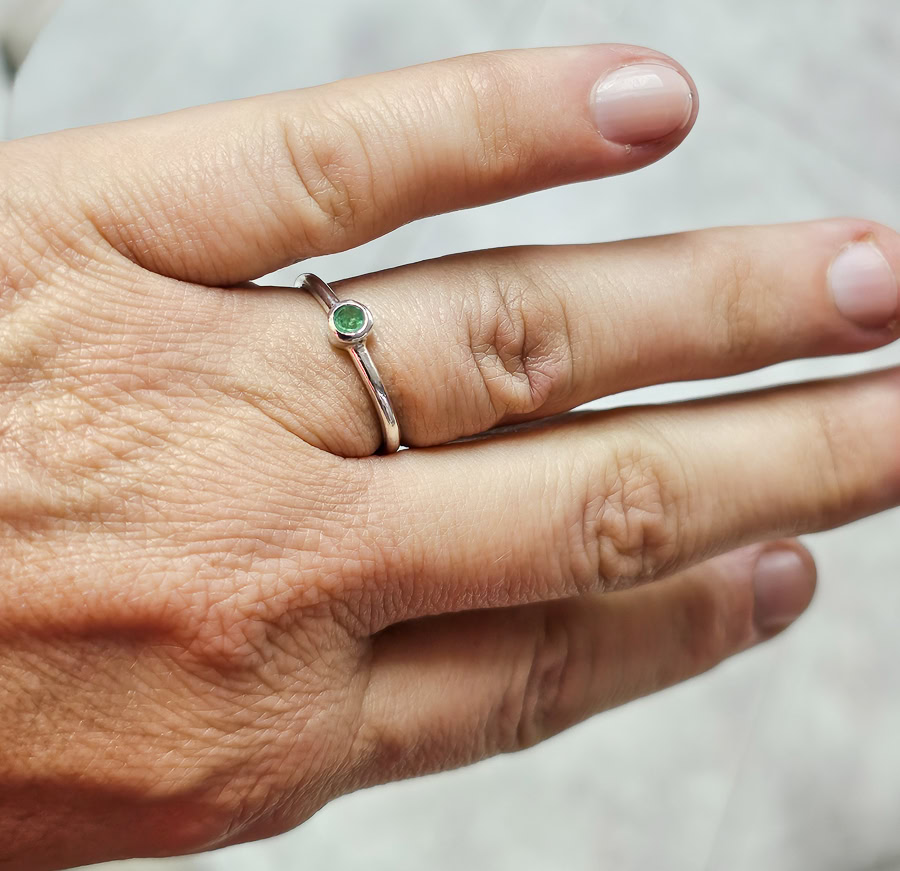
By the end, you’re holding a silver emerald ring that you made from scratch in a country that produces some of the best emeralds on earth.
Let that sink in.
Now, two pieces of advice I wish someone had given me before I went.
Advice #1:
In 2026 the base tour costs around US$140 and includes a simple ring with a small emerald. You can upgrade to a larger stone for an additional price. When I did my tour in 2025 the base price was US$100 and larger stones were an additional US$75 to $125. I went with the basic ring. Everyone else on my tour upgraded.
I watched their finished rings come out.
I was immediately and completely jealous.
Their larger stone rings were stunning. If you can stretch the budget, stretch it. An emerald ring made by your own hands in Bogotá, Colombia is more than a souvenir.
Advice #2:
Do some research on the ring design before you start the tour. The tour company will send you Instagram photos of past rings made by tourists. Spend time looking at the photos (and your own research) to choose your design. There just isn’t enough time after the tour starts to select the ring design that you’ll be proud to wear. Also, with the cheapest and smallest emerald, design choices are limited.
I booked my tour through Viator, but you can also book through Get Your Guide. Spots are limited. This is a small, hands-on workshop, not a group tour so book well in advance.
This is the piece de résistance of Bogotá. Do not leave without doing it.
Final Thoughts: 8 Must-Do Bogota Tours
Here’s what I want you to take away from all of this.
Bogotá is not an easy city to love at first glance. It’s big. It’s chaotic. It can feel overwhelming before you find your footing.
But the tours on this list exist to solve exactly that problem.
Do the walking tour and the conflict history tour back to back and suddenly Bogotá makes sense. Do A Chef’s Tour and the fruit tour and you’ll never look at Colombian food the same way. Do the graffiti tour and you’ll start reading the walls everywhere you go. Do the bike tour and you’ll finally see the city beyond La Candelaria.
And then make yourself a ring.
By the time you leave, you won’t just have visited Bogotá. You’ll understand it. And there’s a difference.
That’s not sightseeing. That’s traveling.
And maybe, just maybe, Bogota will become one of your favorite places in Colombia.
Are you on Pinterest?
Hey! How about saving one of these pins to Pinterest to read for later?
And feel free to follow me on Pinterest, where you’ll find lots of travel articles for everywhere around the world.


Are you looking for more travel info for South America?
- 10 Best Medellin Tours Worth Your Time and Money
- Medellin Itinerary: 4-6 Days in the City of Eternal Spring
- 15 Best Places to Visit in Colombia
- The Best Food Tour in Lima, Peru You Won’t Want to Miss
- 12 Best Day Trips from Quito, Ecuador
- Quito Itinerary for Culture, Food & History Lovers
- 44 Best Things to Do In Quito, Ecuador
- The Best (And Worst) Books on Colombia: Read Before You Go!
- Top 15 Places to Visit in Ecuador


0 Comments